
Curated by CO,MA, this exhibition brings together the work of Alejandro Espinosa, Darío Fernández, Marco Ramírez, Jaime Ruiz Otis, Emilio Valdés, Jessica Wozny, and Trilce Zúñiga. From distinct perspectives, these artists explore the night and the beings that emerge within it, as well as the transformation of the world during the interval when light recedes. Paradoxically, night expands perception toward the unknown, toward that which takes shape in the encounter between the senses and the imagination.
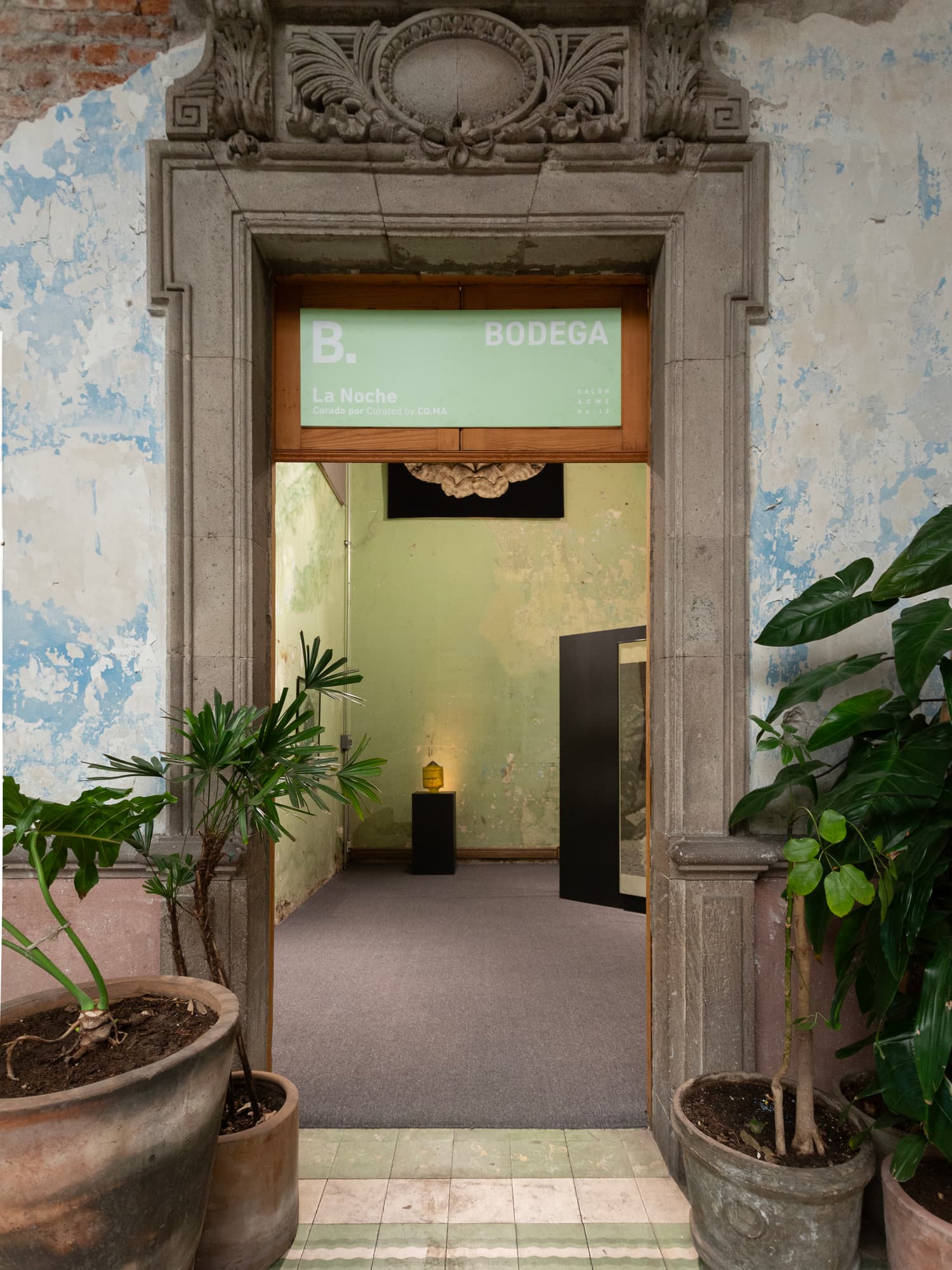
This exhibition brings together the work of Alejandro Espinosa, Darío Fernández, Marco Ramírez, Jaime Ruiz Otis, Emilio Valdés, Jessica Wozny, and Trilce Zúñiga, who, from different perspectives, reflect on the night and the beings that emerge within it, as well as the transformation of the world during that interval when light recedes. Paradoxically, night opens perception toward the unknown, toward that which takes shape at the intersection of the senses and the imagination.
On one hand, we have invited artists whose work engages with nocturnal fauna or supernatural figures that awaken at dusk, inhabiting the night both physically and imaginatively. On the other, artists who explore the presence of human beings whose lives unfold in darkness: individuals and communities shaped by insomnia, night work, or social lives that begin when the rest of the world is asleep. Both realms coexist and intersect within the same temporal cycle, and the arrangement of the works throughout the exhibition space is conceived as a chronicle of what might occur over the course of a single night.
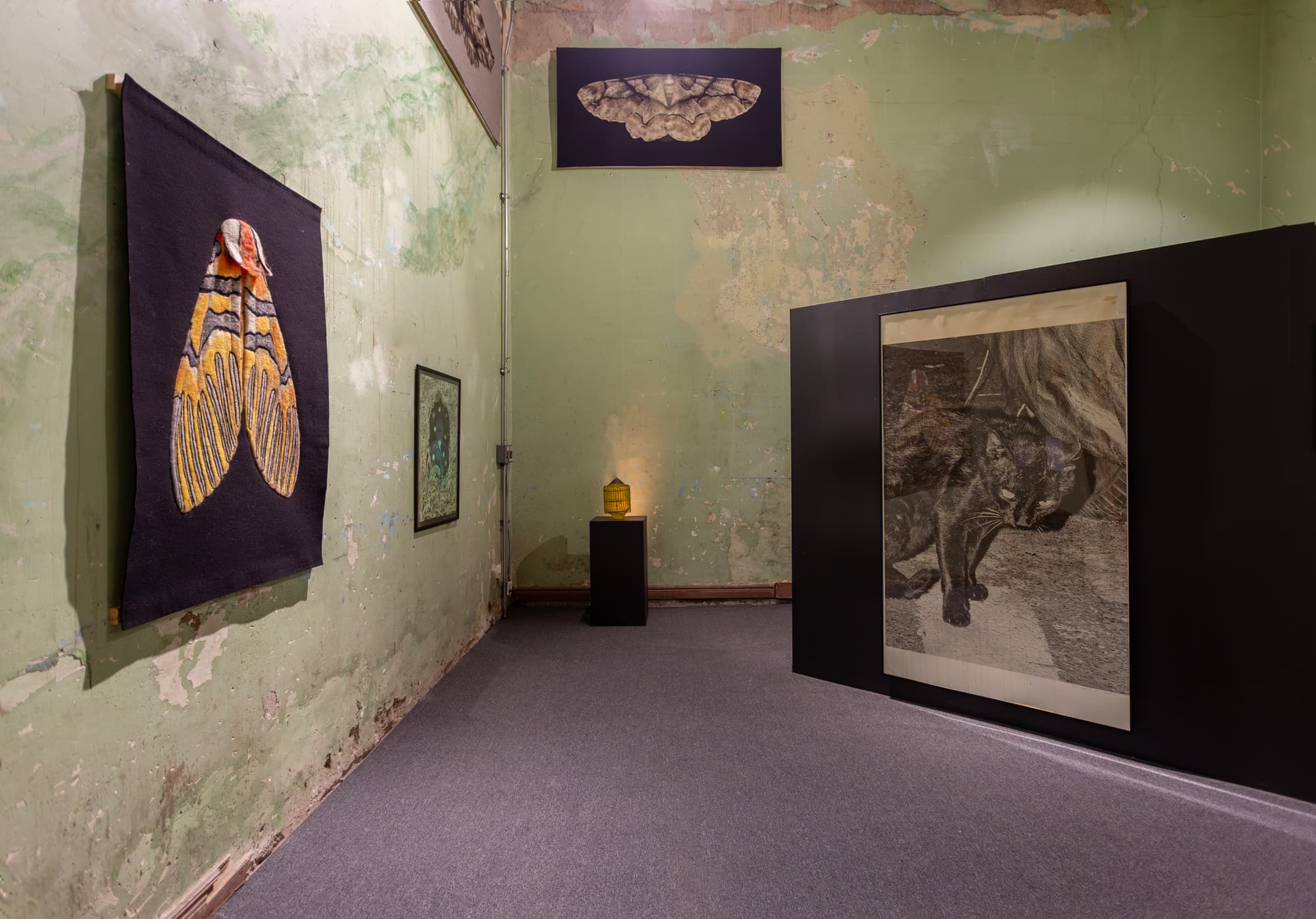
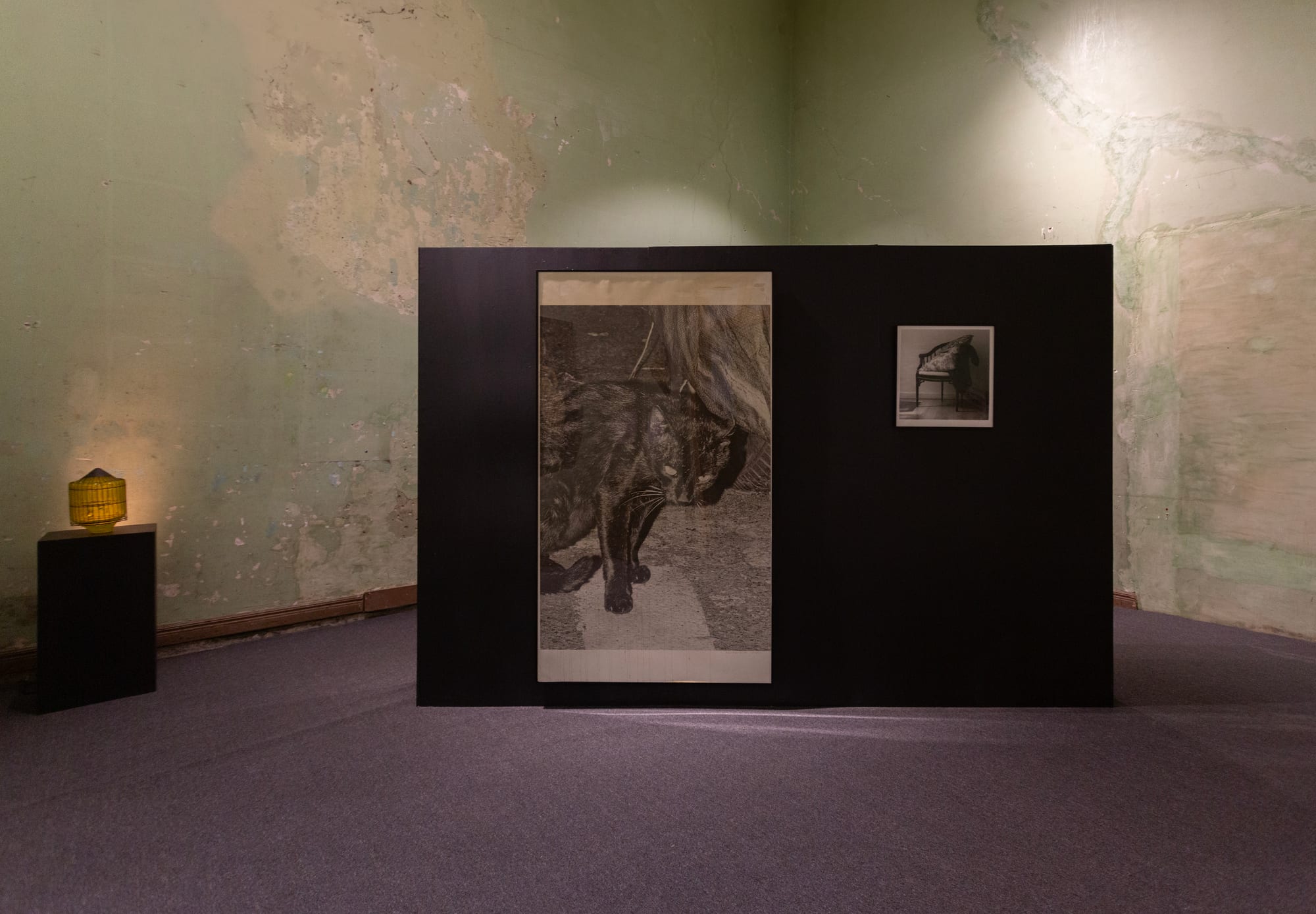
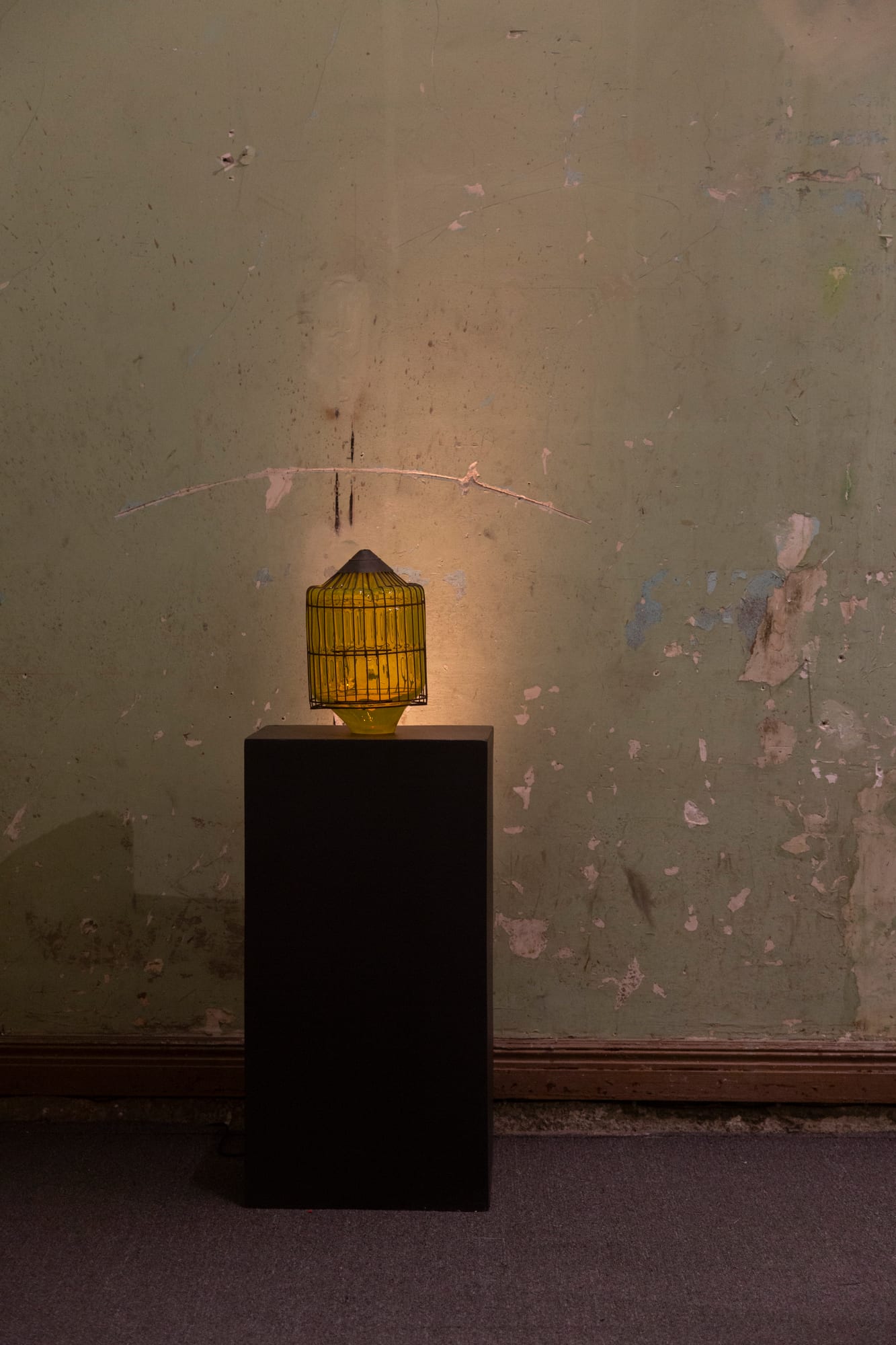
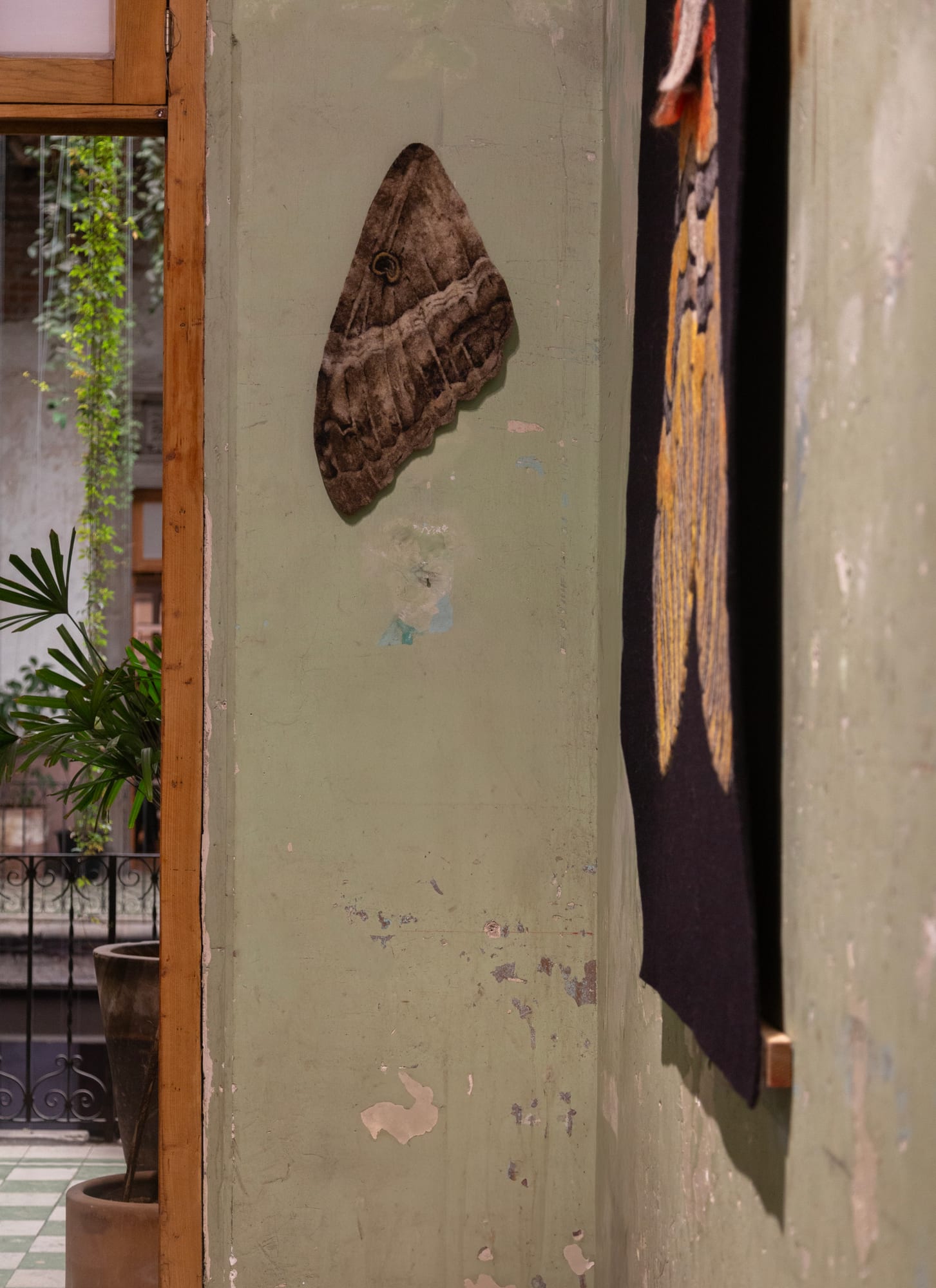
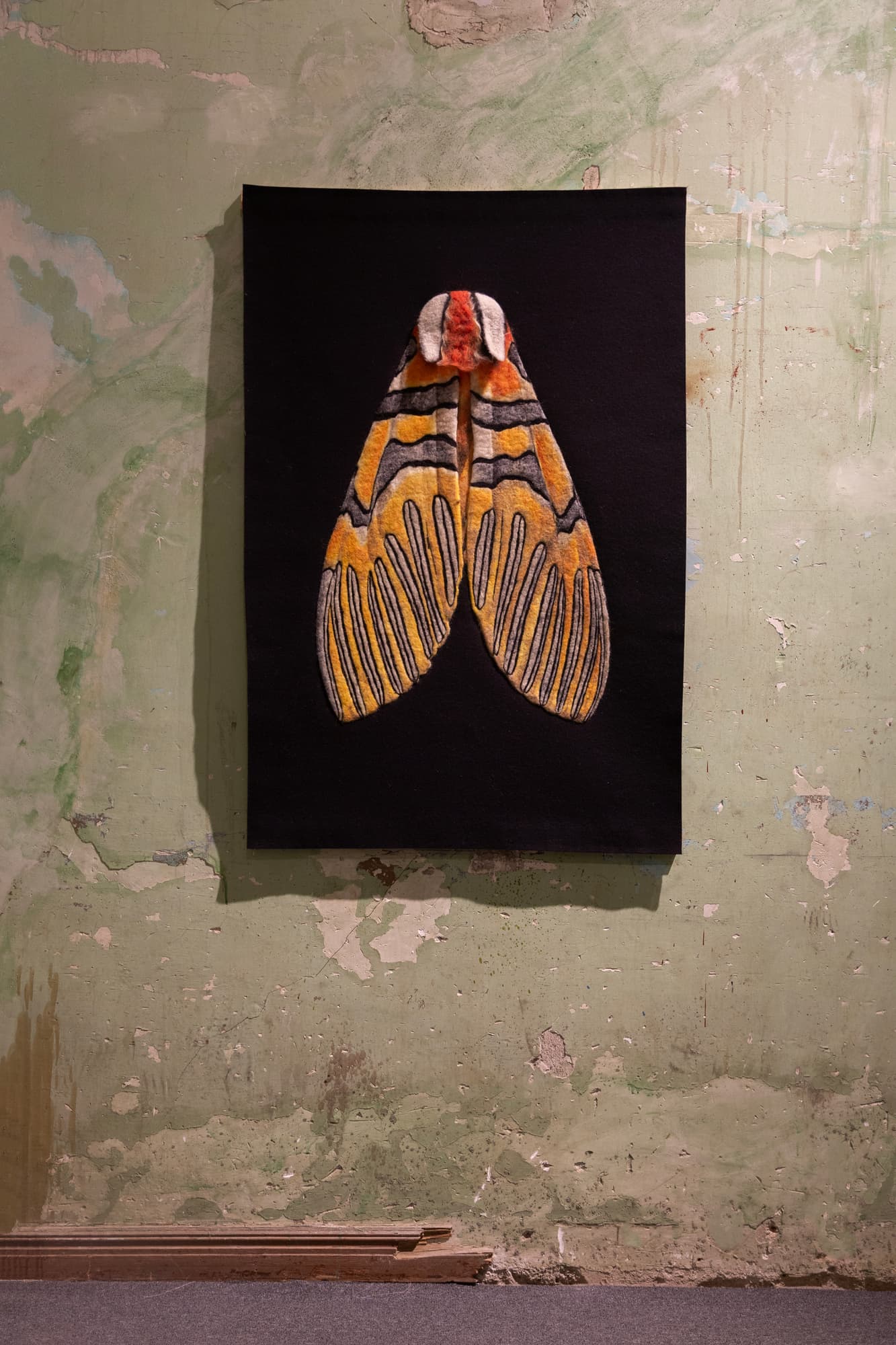
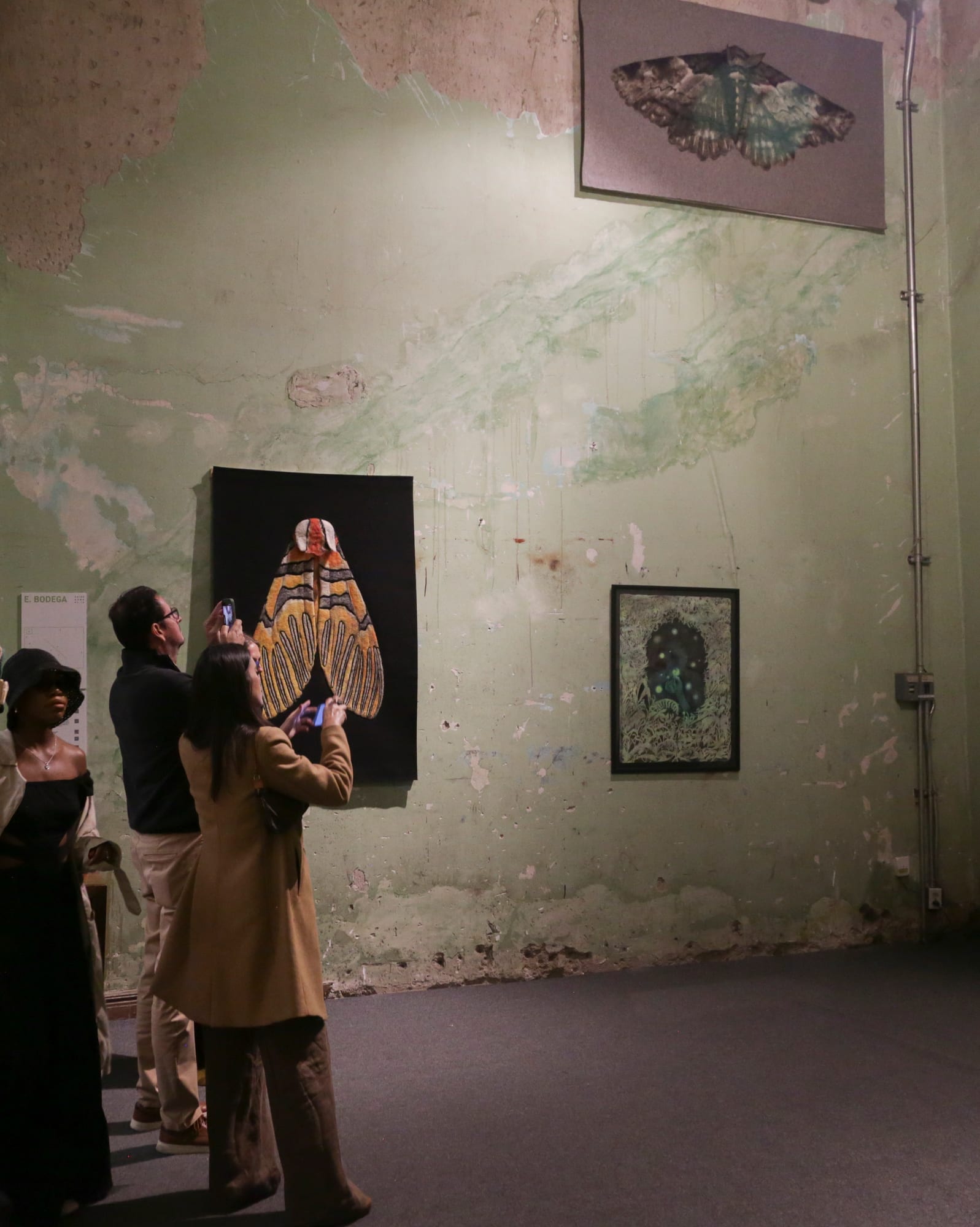
The exhibition includes a selection from Jaime Ruiz Otis‘s Fauna series, composed of nocturnal butterflies and moths created in 2018 while the artist was living in San Agustín Etla, Oaxaca. Also on view are two cages that, in keeping with Ruiz Otis’s practice, originated as discarded objects or pieces of scrap material and were transformed through artistic intervention—in this case, through the incorporation of blown glass.
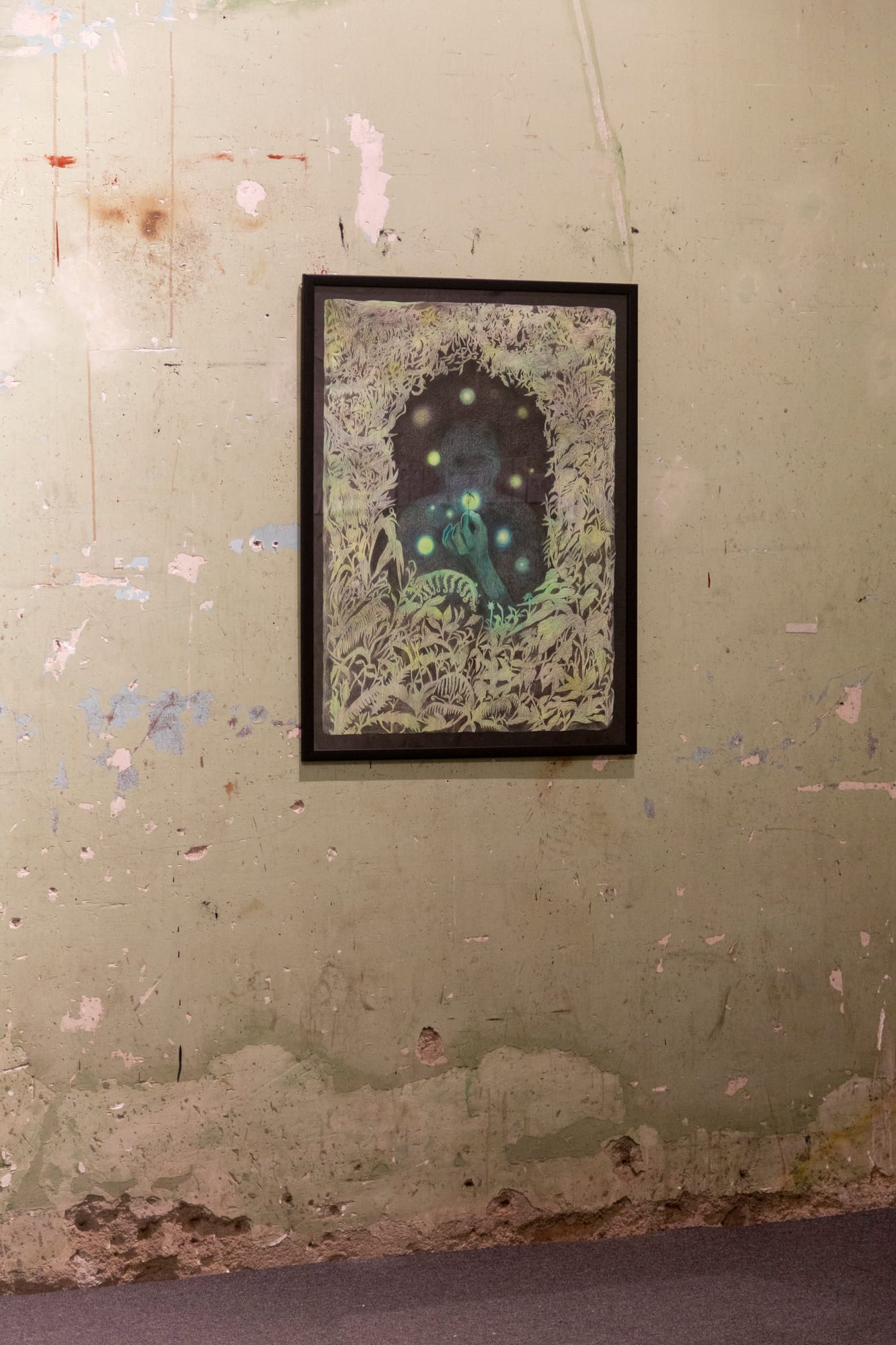
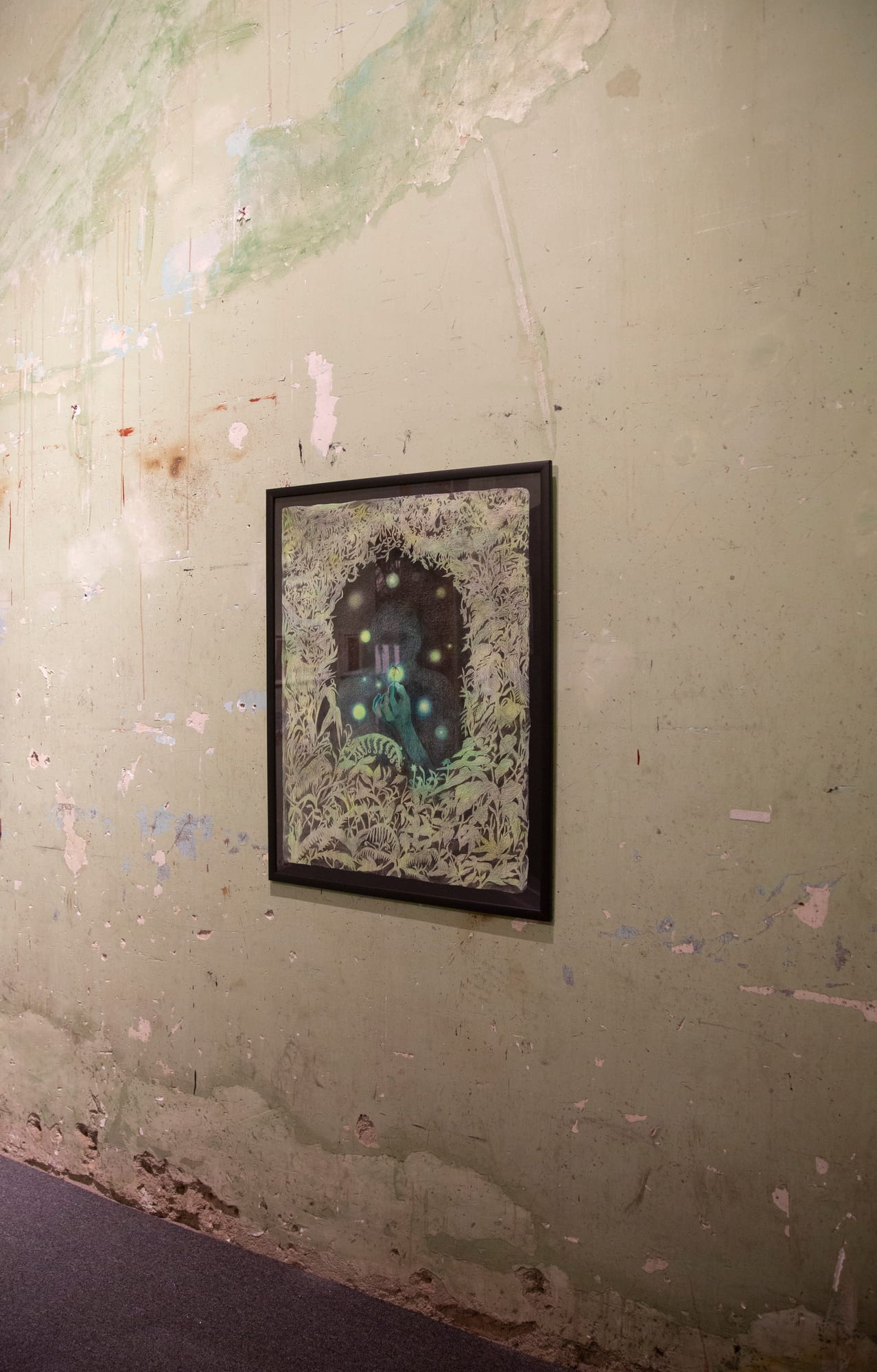
These cages establish a direct dialogue with works by Trilce Zúñiga and Emilio Valdés. Zúñiga presents a drawing that explores the figure of the firefly, creating a visual connection with Ruiz Otis’s cages, as though these insects had become trapped within them. Emilio Valdés contributes a photograph of a black cat lying in wait, introducing a latent tension between predator and the insects we imagine inhabiting the cages.
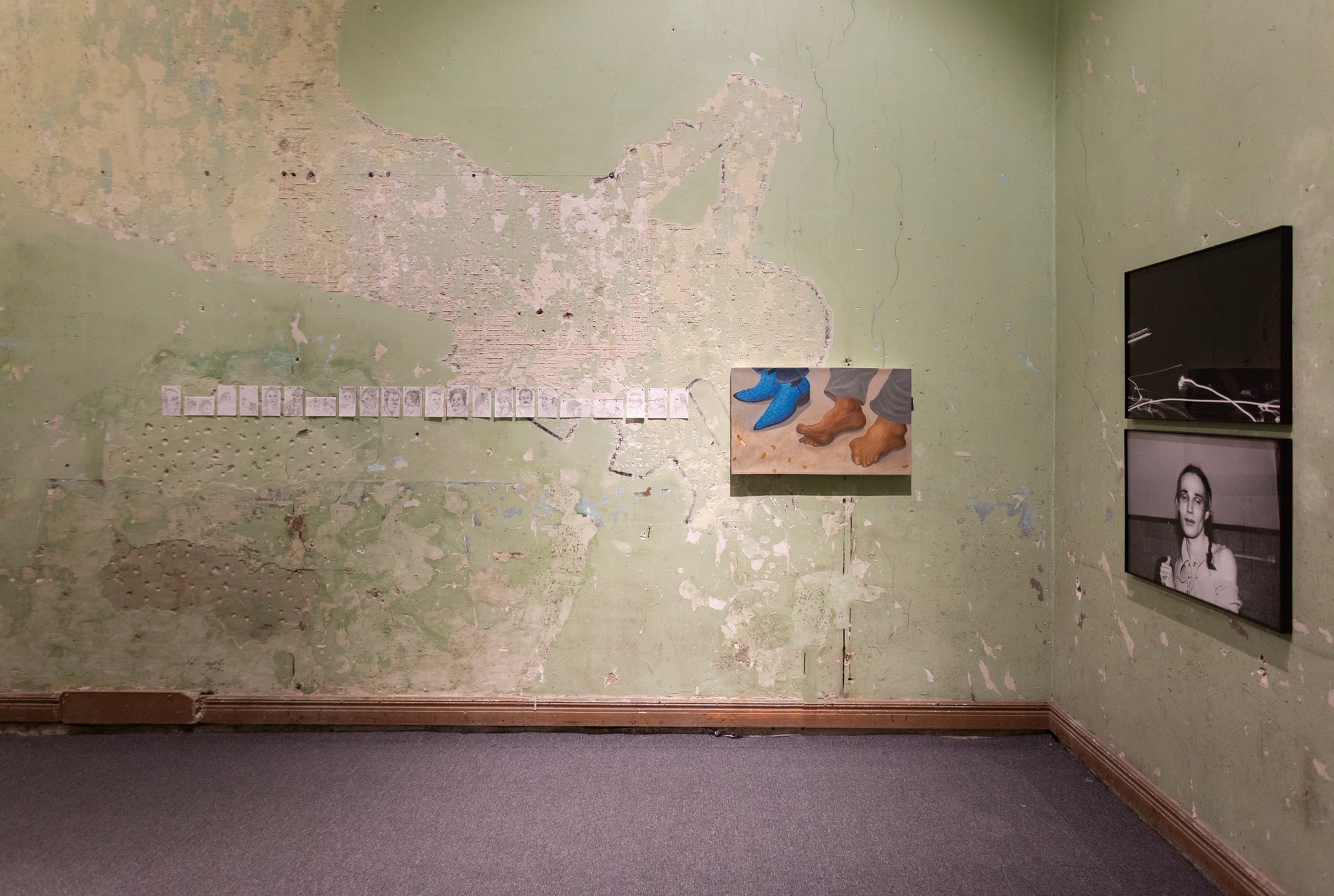
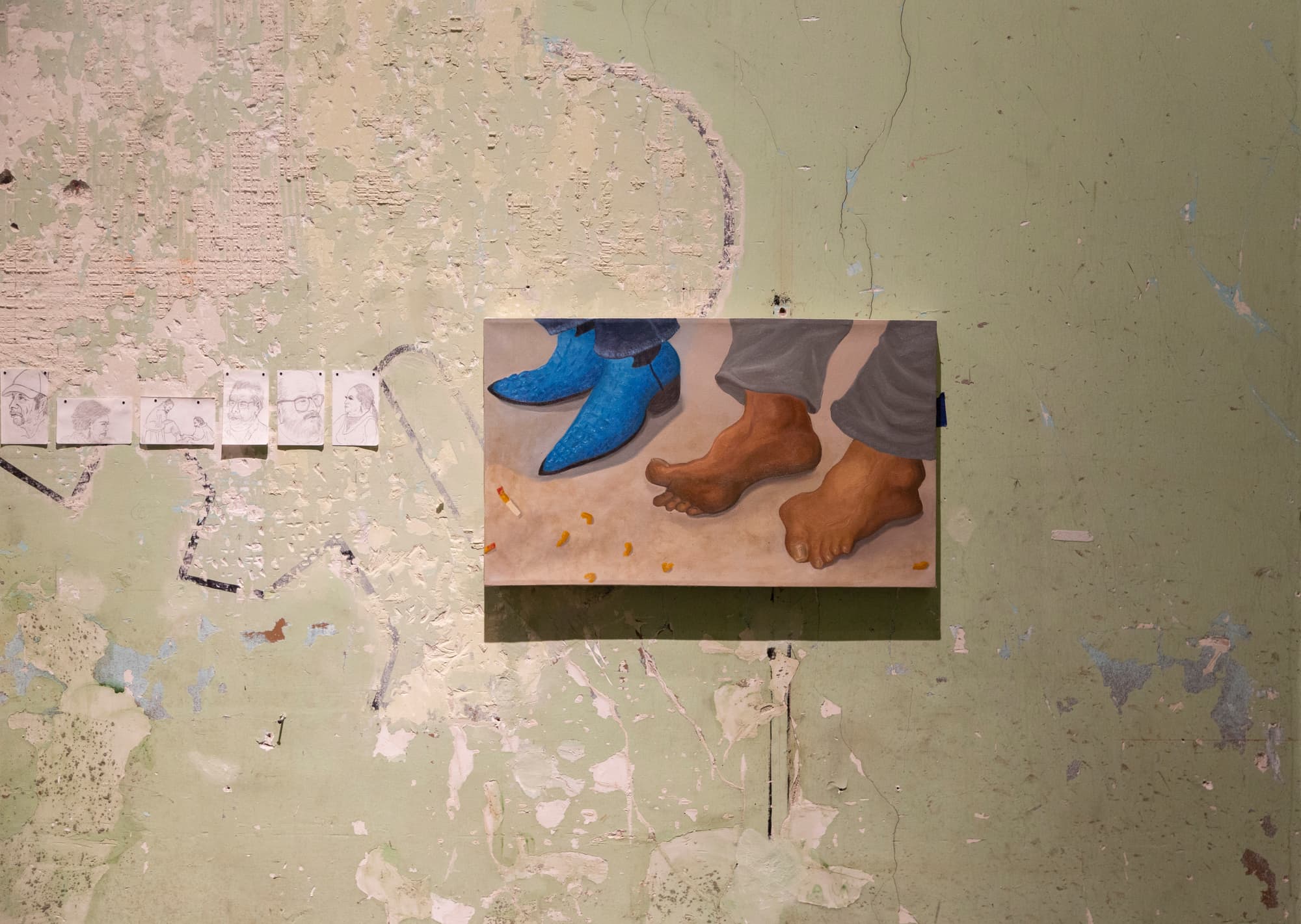
Marking the beginning of the section dedicated to the night as a challenge to the circadian cycle is Alejandro Espinosa‘s series of drawings Sketches de Cantina. The work spans six years (2020–2025) of portraits and everyday scenes encountered during the artist’s visits to cantinas and bars throughout Mexico. Torn from his notebooks, the sixty-three sketches form an installation that bears witness to these nocturnal encounters. Also included is the painting Tugurio (Dive Bar), a raw scene in which the deformity of a pair of bare feet contrasts with expensive exotic-leather boots. The composition is confined to the floor, where only four feet and cigarette butts are visible. Despite the apparent social differences between the characters—suggested solely through their feet—those distinctions dissolve within the image, prompting the viewer to imagine a space of democratic coexistence: the dive bar. Espinosa’s final work, Congal, is a drawing depicting a rugged cowboy and a diminutive young woman sharing a dance. The red sanguine medium merges with their silhouettes, evoking an infernal atmosphere that heightens the intensity of the nocturnal encounter.
This sleepless journey continues with a selection of photographs by Marco Ramírez, who between 2017 and 2018 produced 4,787 analogue photographs of people “at the party.” The selection presented here forms part of a forthcoming publication and can be understood as a portrait of the nocturnal city through the lives of its inhabitants. These images reveal what takes place while others choose to sleep and capture those moments when the perception of time becomes distorted, leading us to ask: why must morning always arrive?
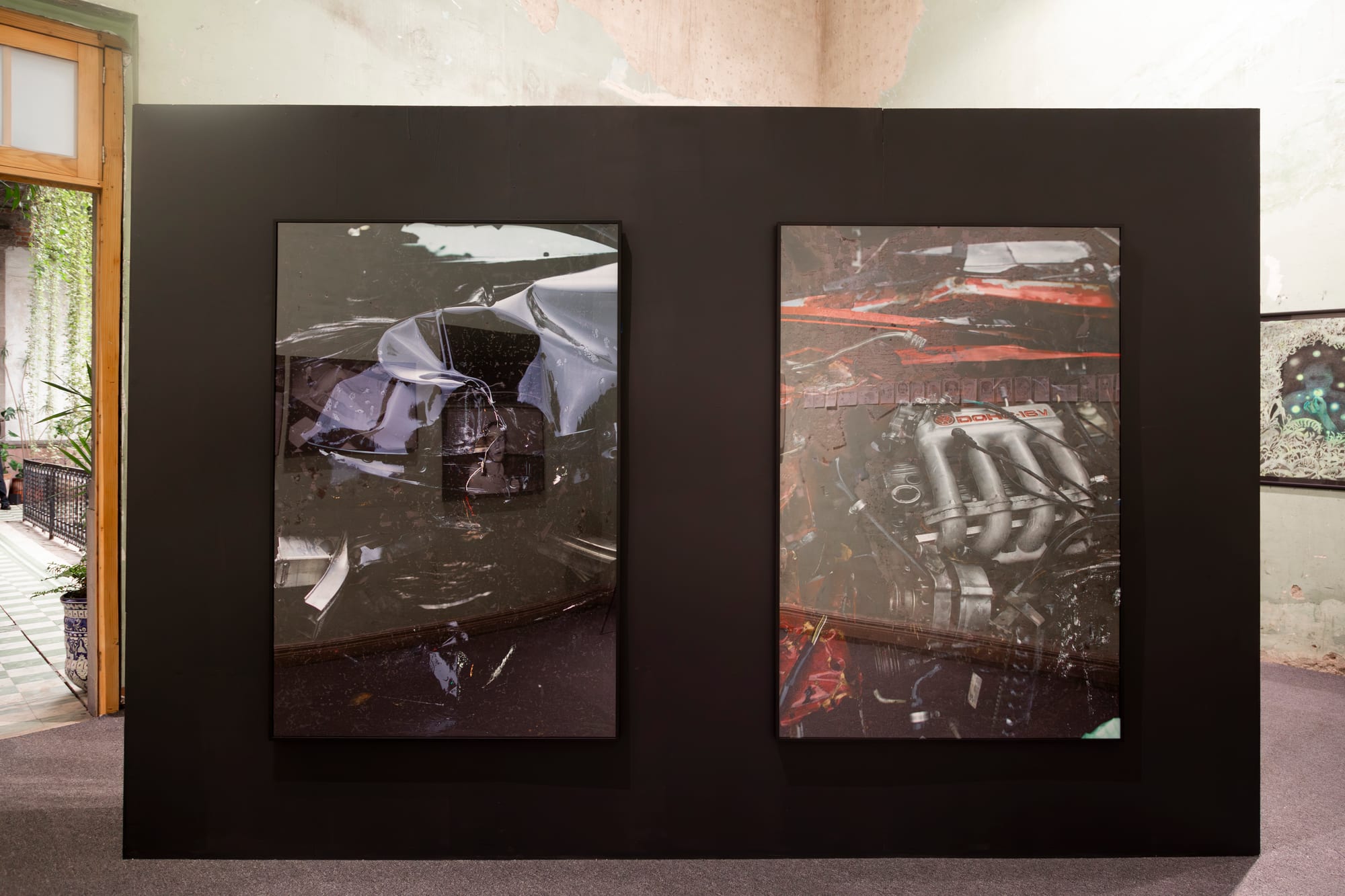
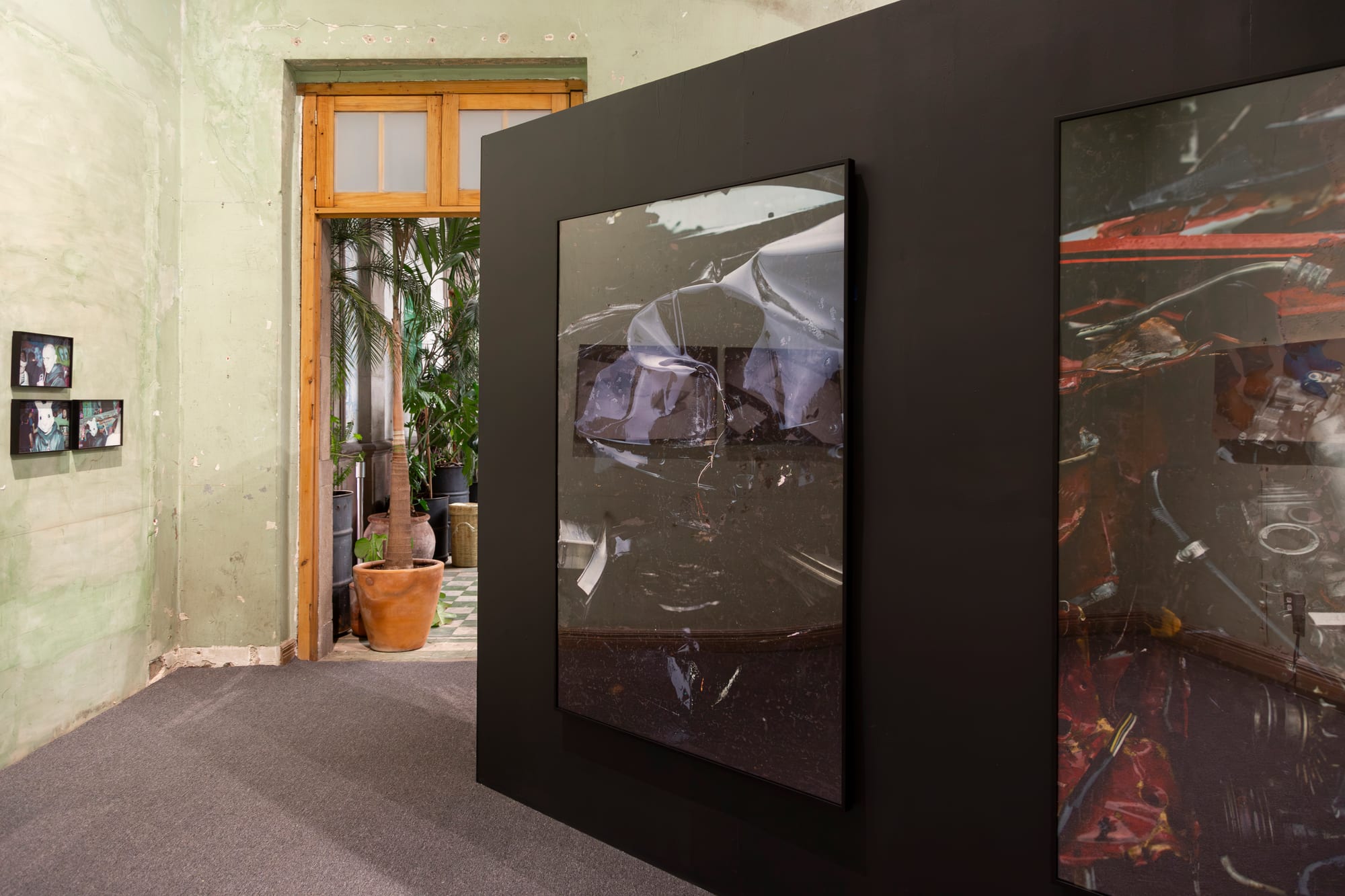
The night out continues with another photograph by Emilio Valdés depicting the hood of a black automobile after a collision. The image immediately evokes the notion of a “total loss,” undoubtedly an unfortunate way to end a night. Yet the work remains as a trace of transformed intention and of the psychological effects that the night exerts upon the imagination.
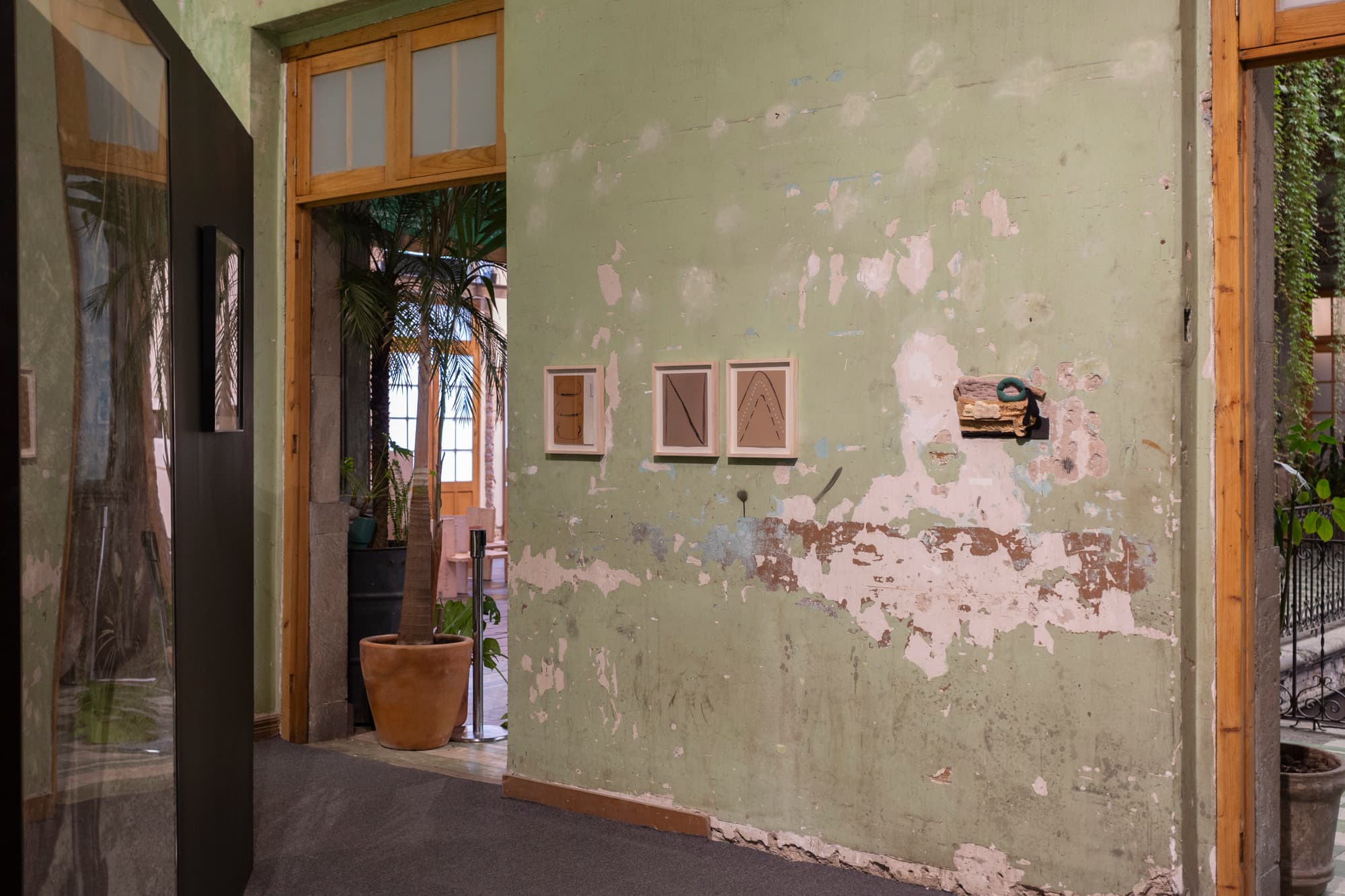
The final section of the exhibition approaches the night through bodily postures and gestures. Four works by Jessica Wozny explore different physical positions associated with sleep. Through these pieces, the artist investigates the gestures of rest and the sleeping body. We encounter figures falling asleep, vanilla pods combined with homeopathic pellets, and a figure reclining on a bench.
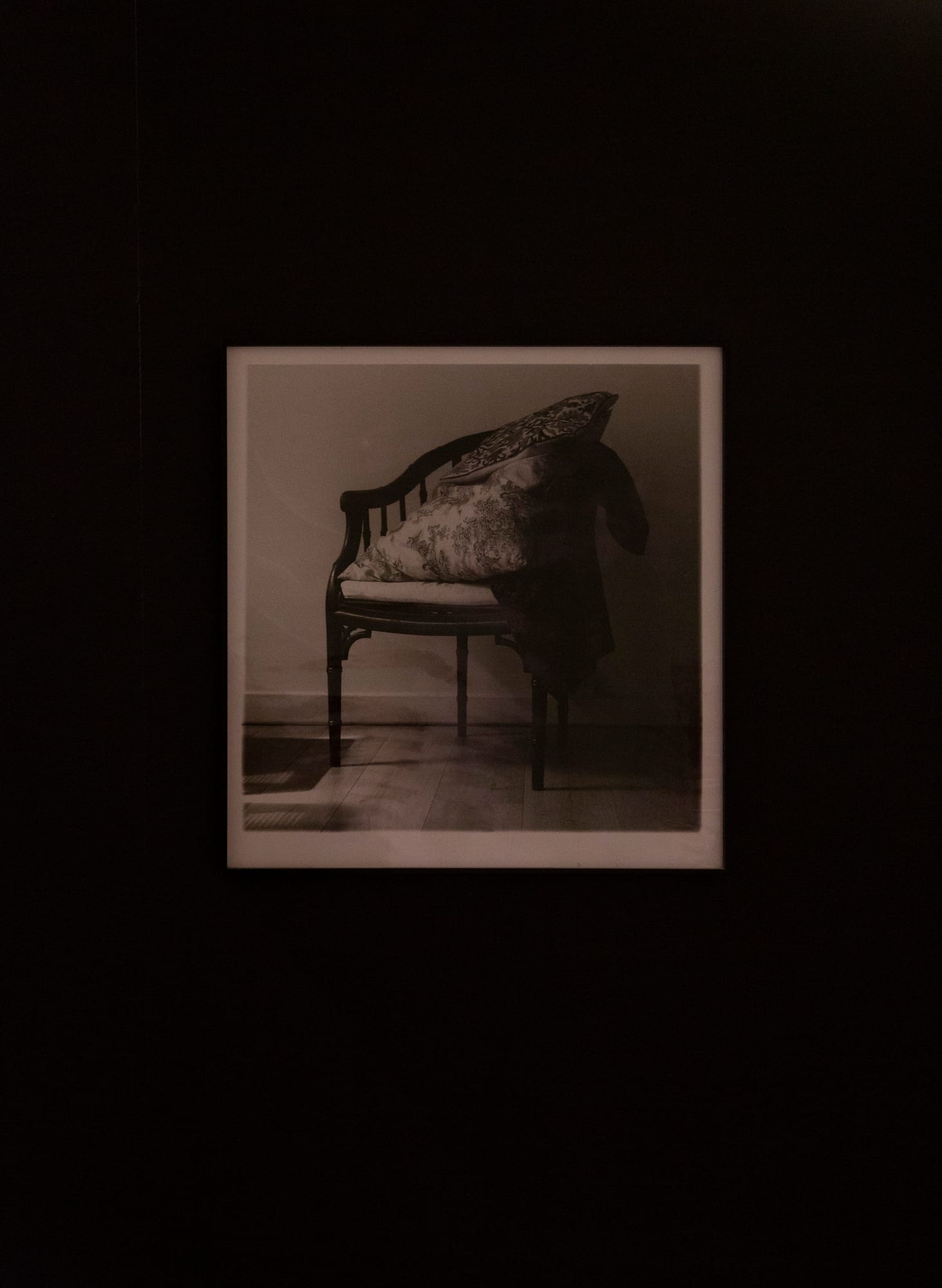
Finally, the exhibition includes a photograph by Darío Fernández that addresses the act of sleeping through the absence of the body itself: two cushions and a blanket arranged on a chair. The image suggests that someone has removed these objects in order to lie down on a bed elsewhere in the room.