
A collaboration with UNNO during Mexico City Art Week 2026. The exhibition was presented at the Amalia Hernández Folkloric Ballet Academy. We developed the curatorial text around the concept of staging intimate objects within a theatrical setting.
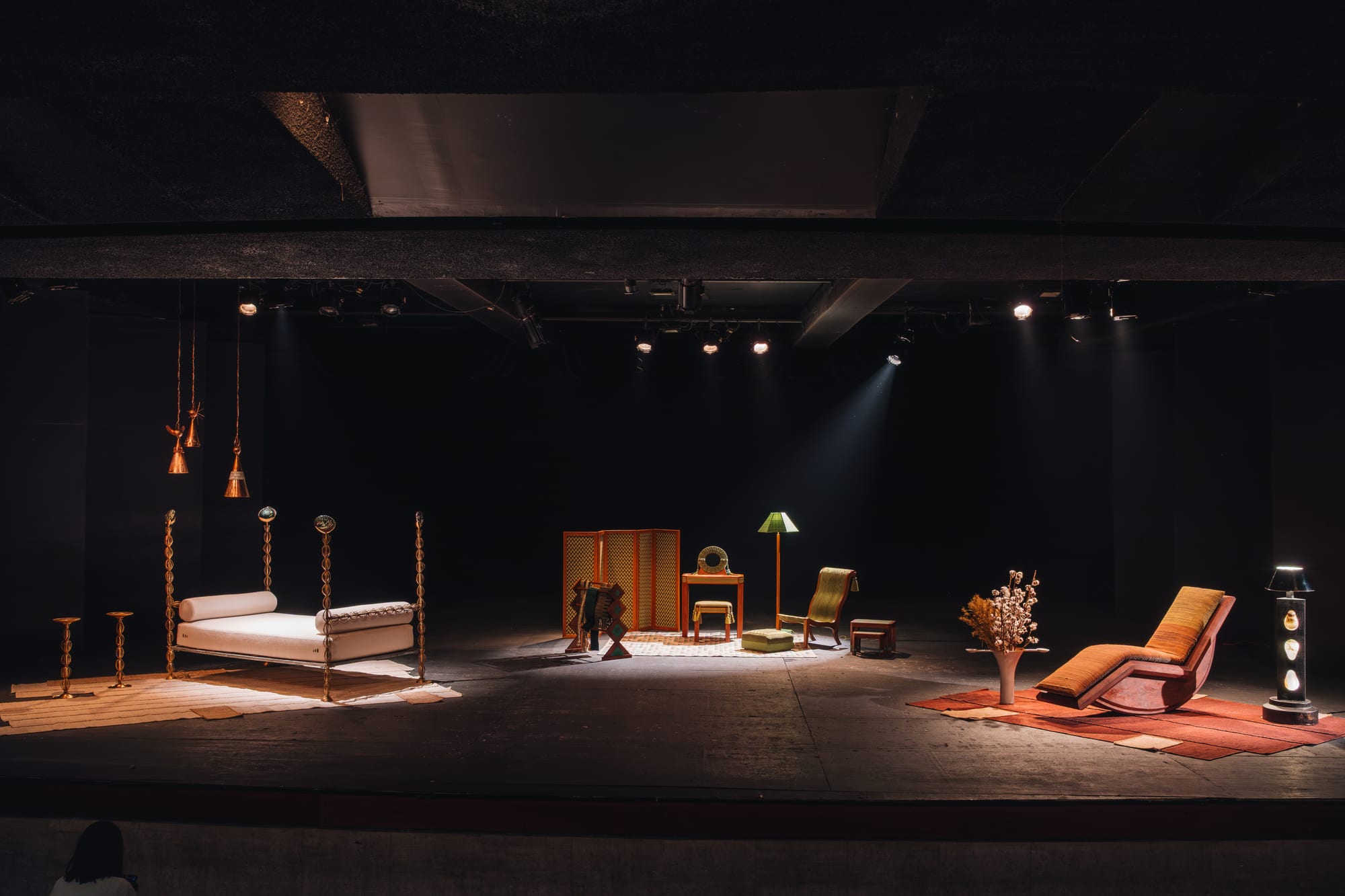
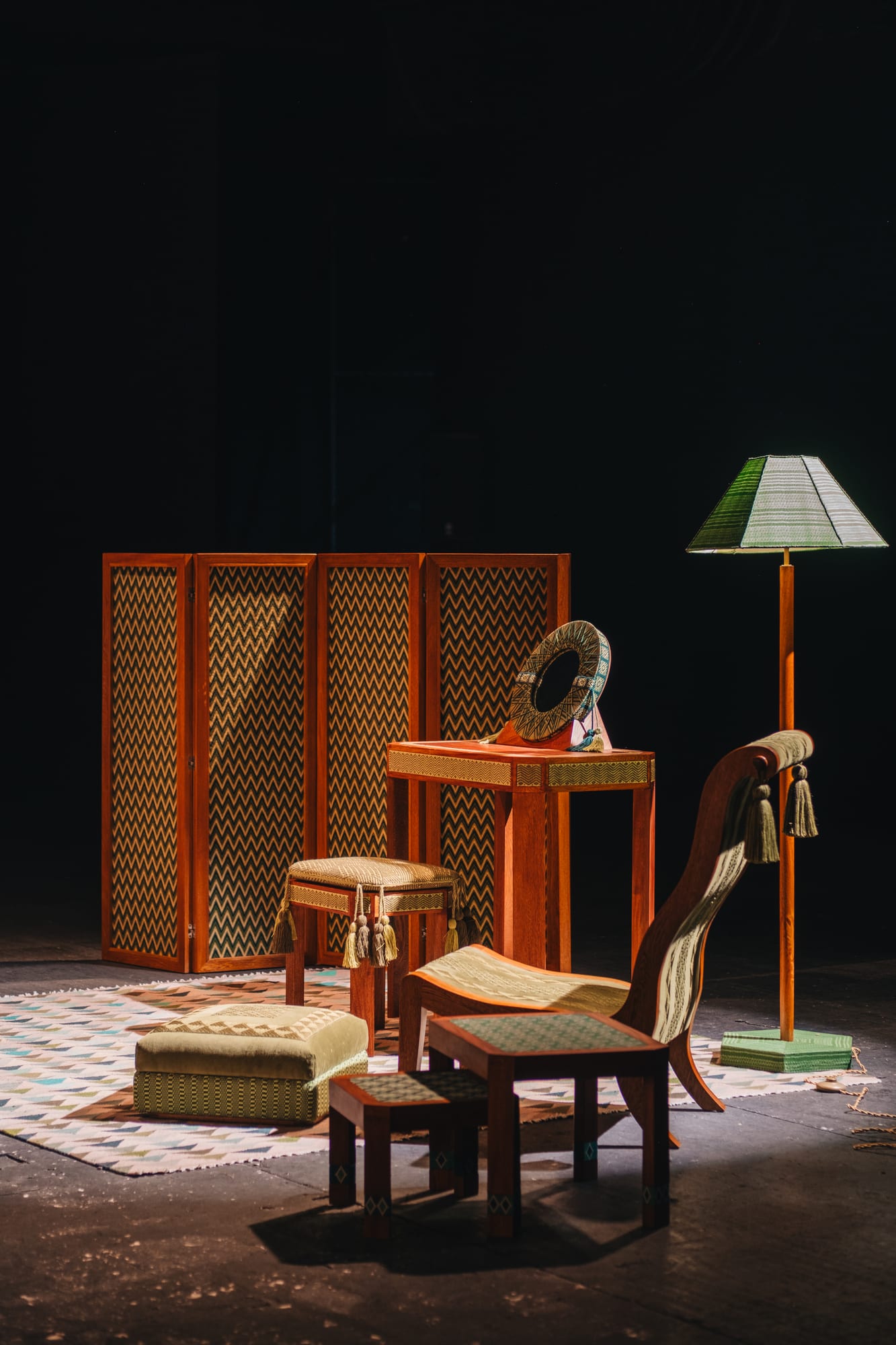
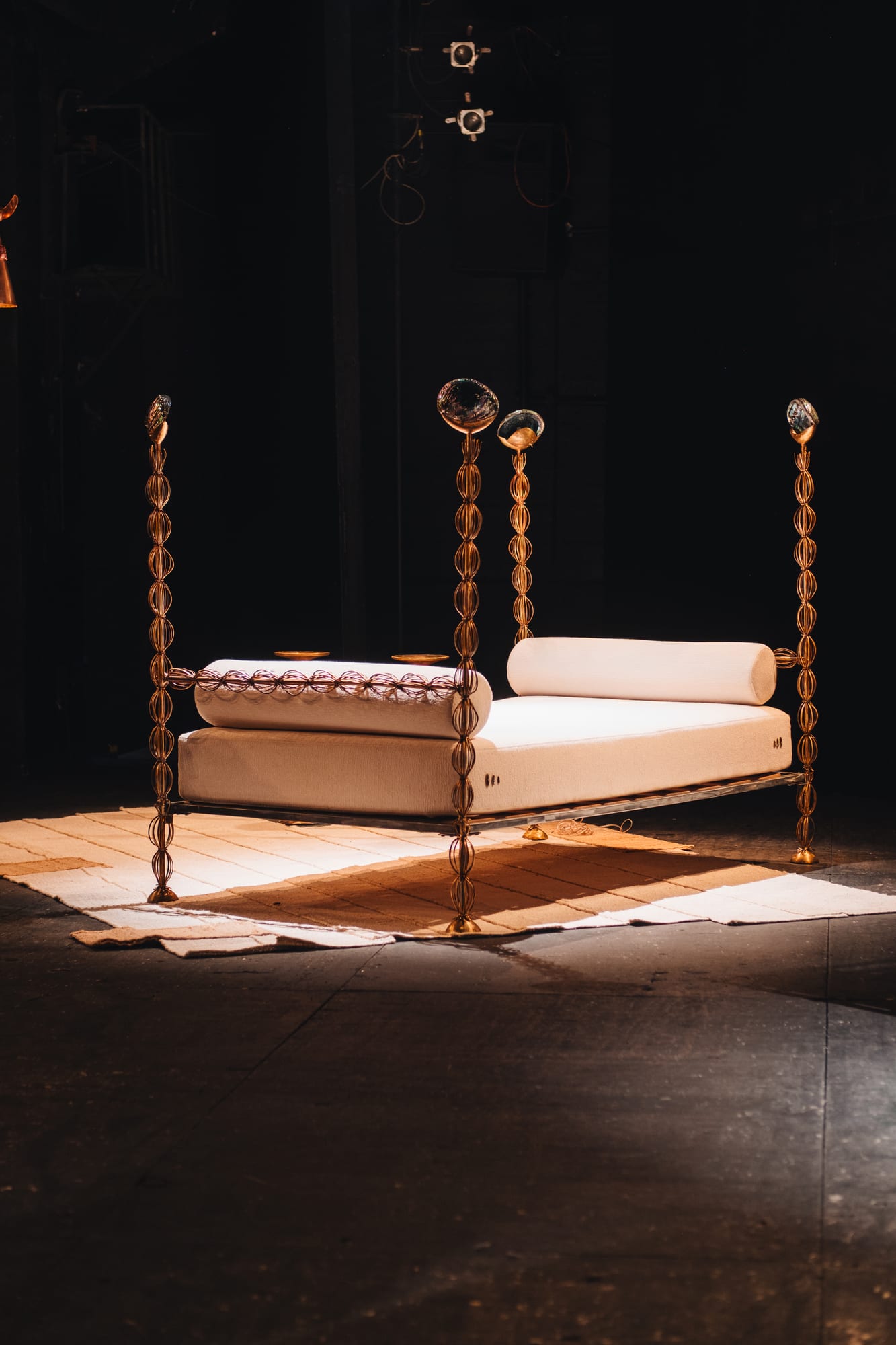
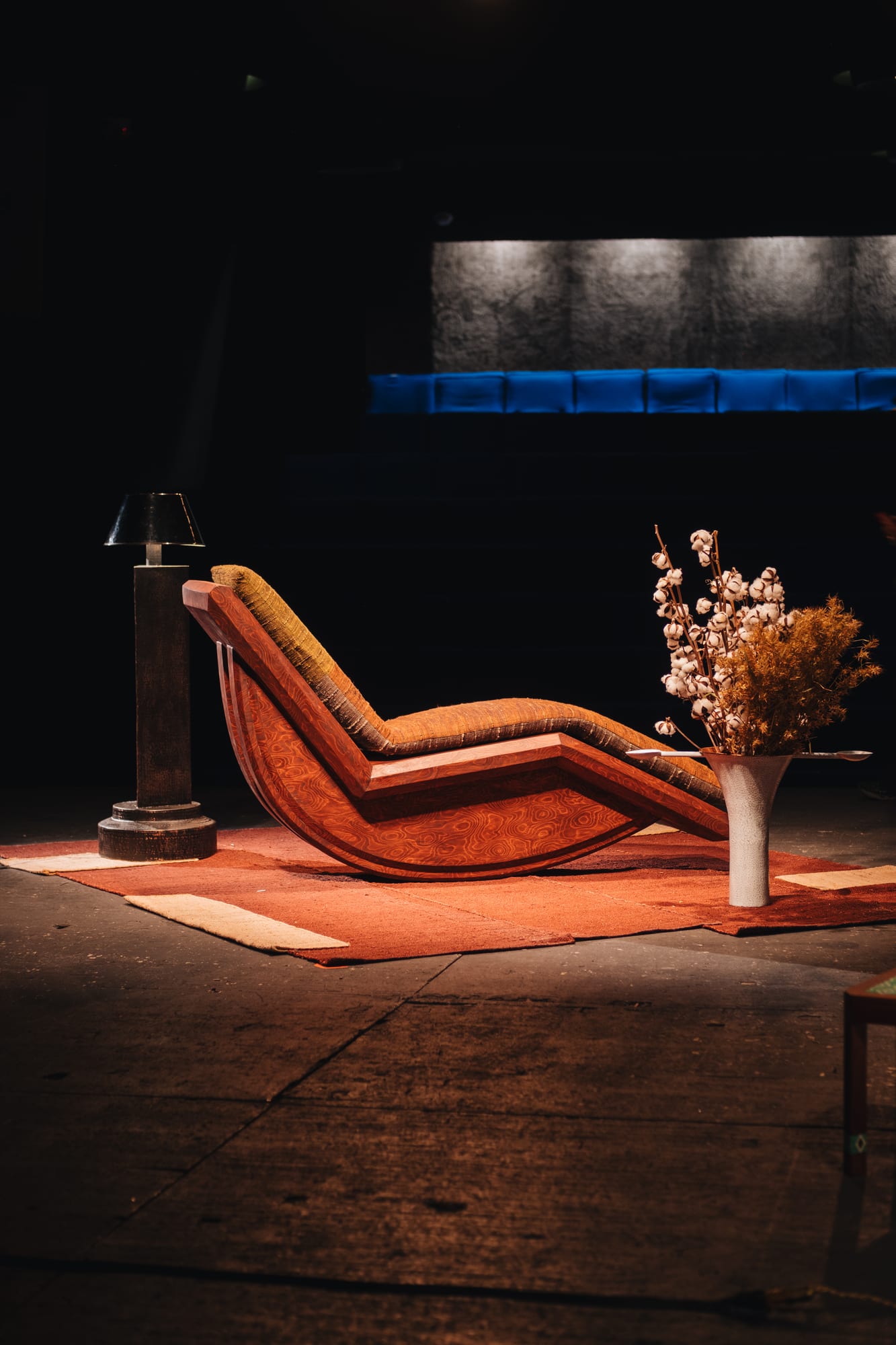
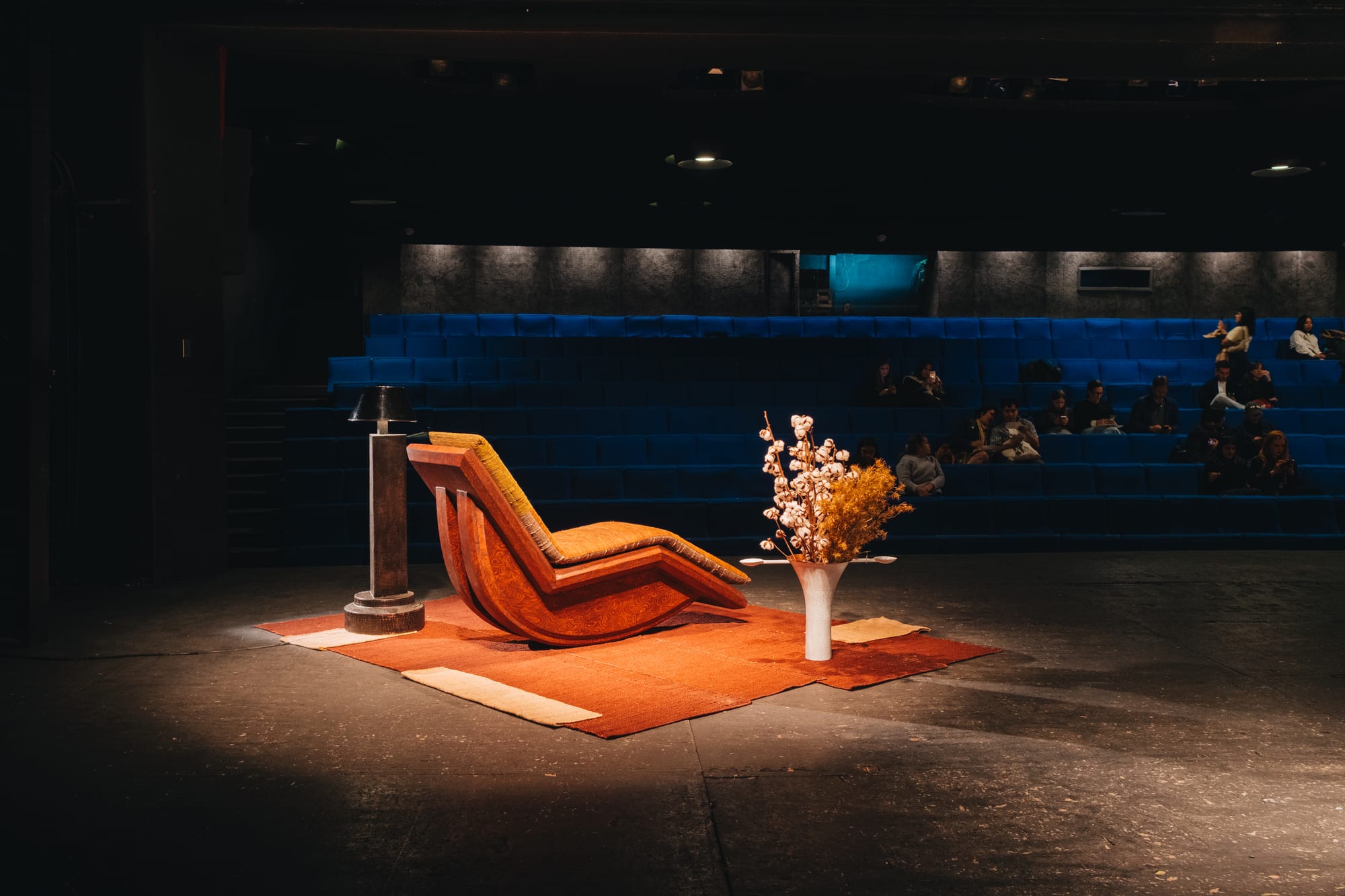
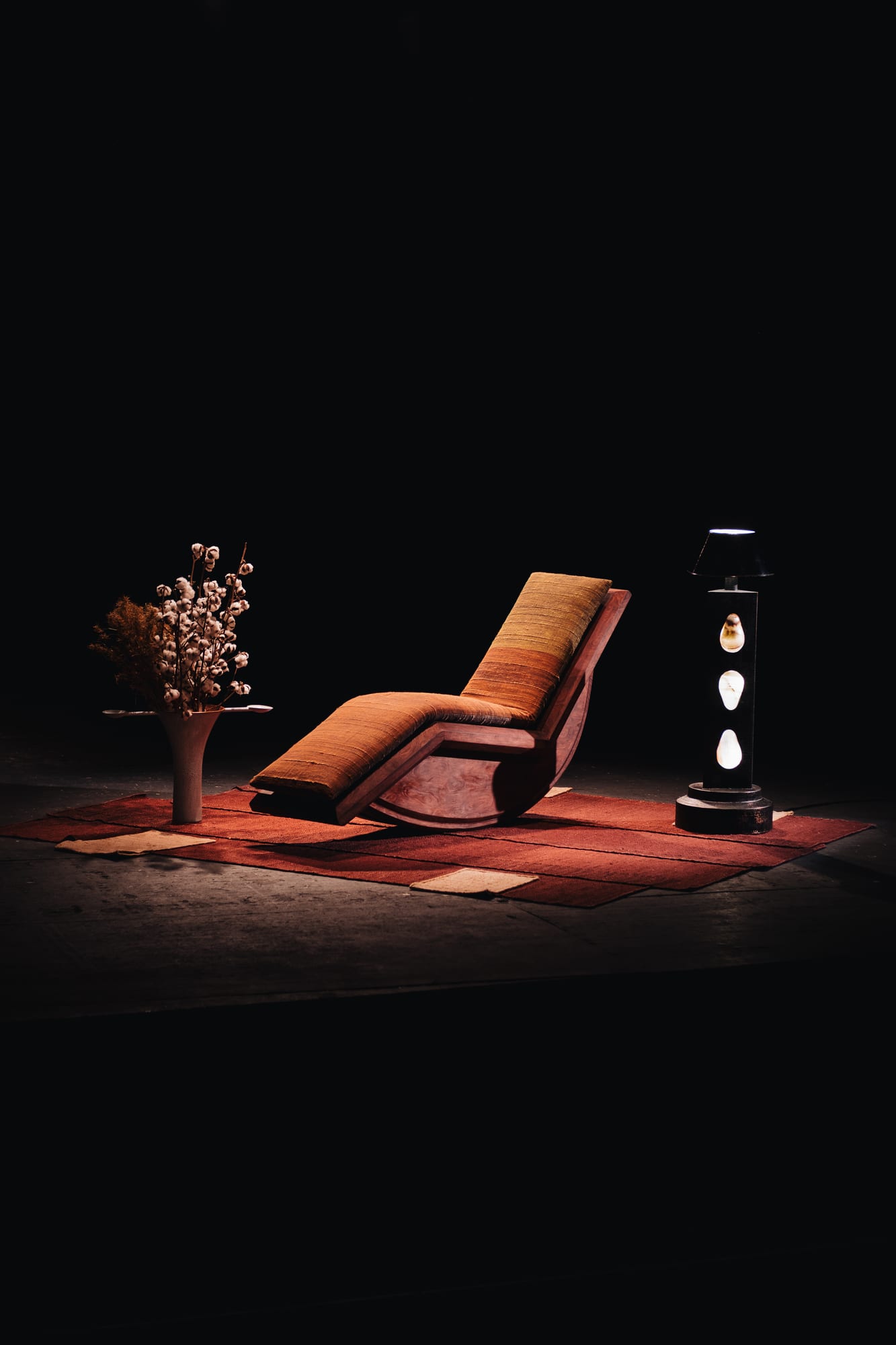
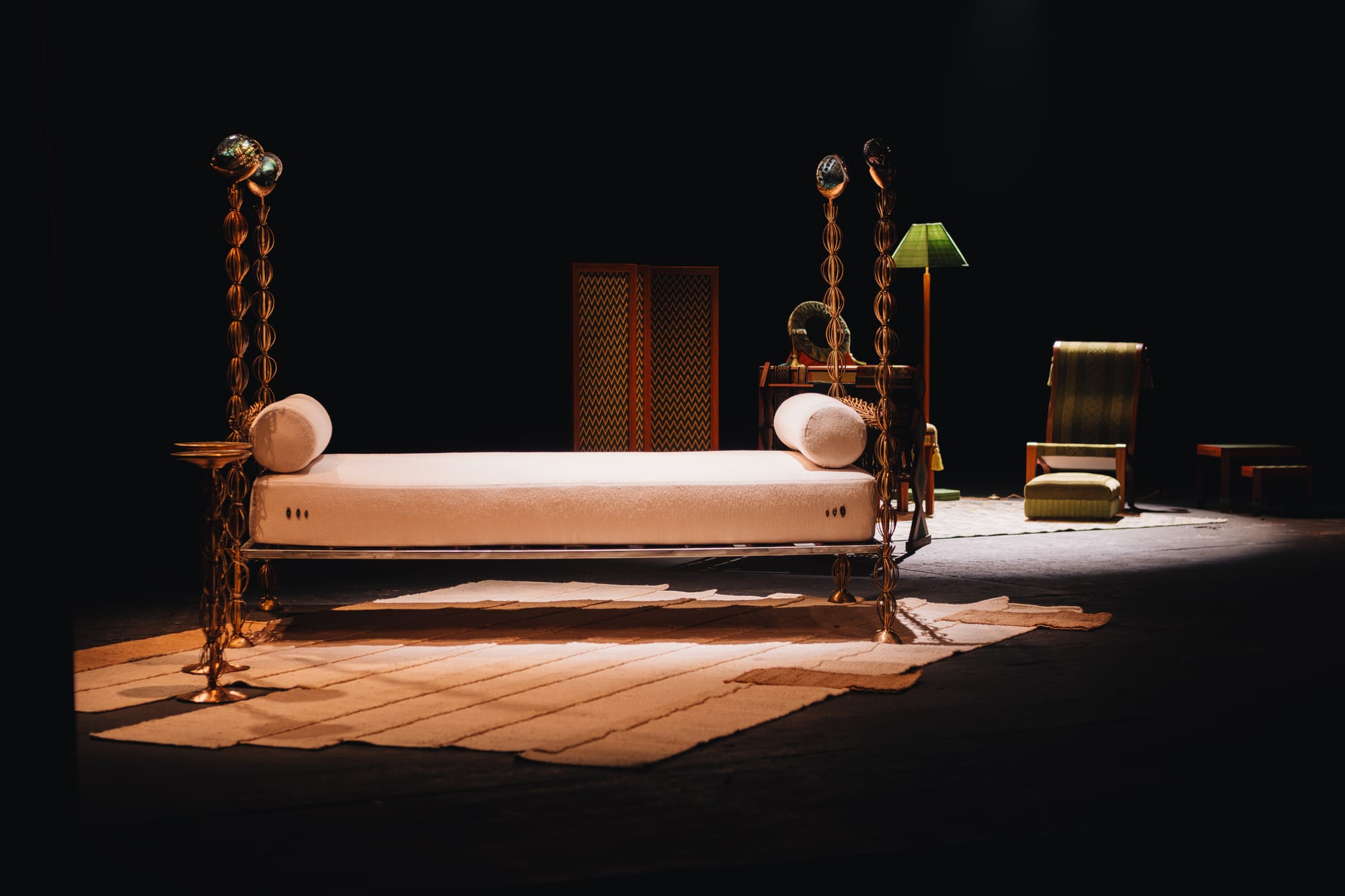
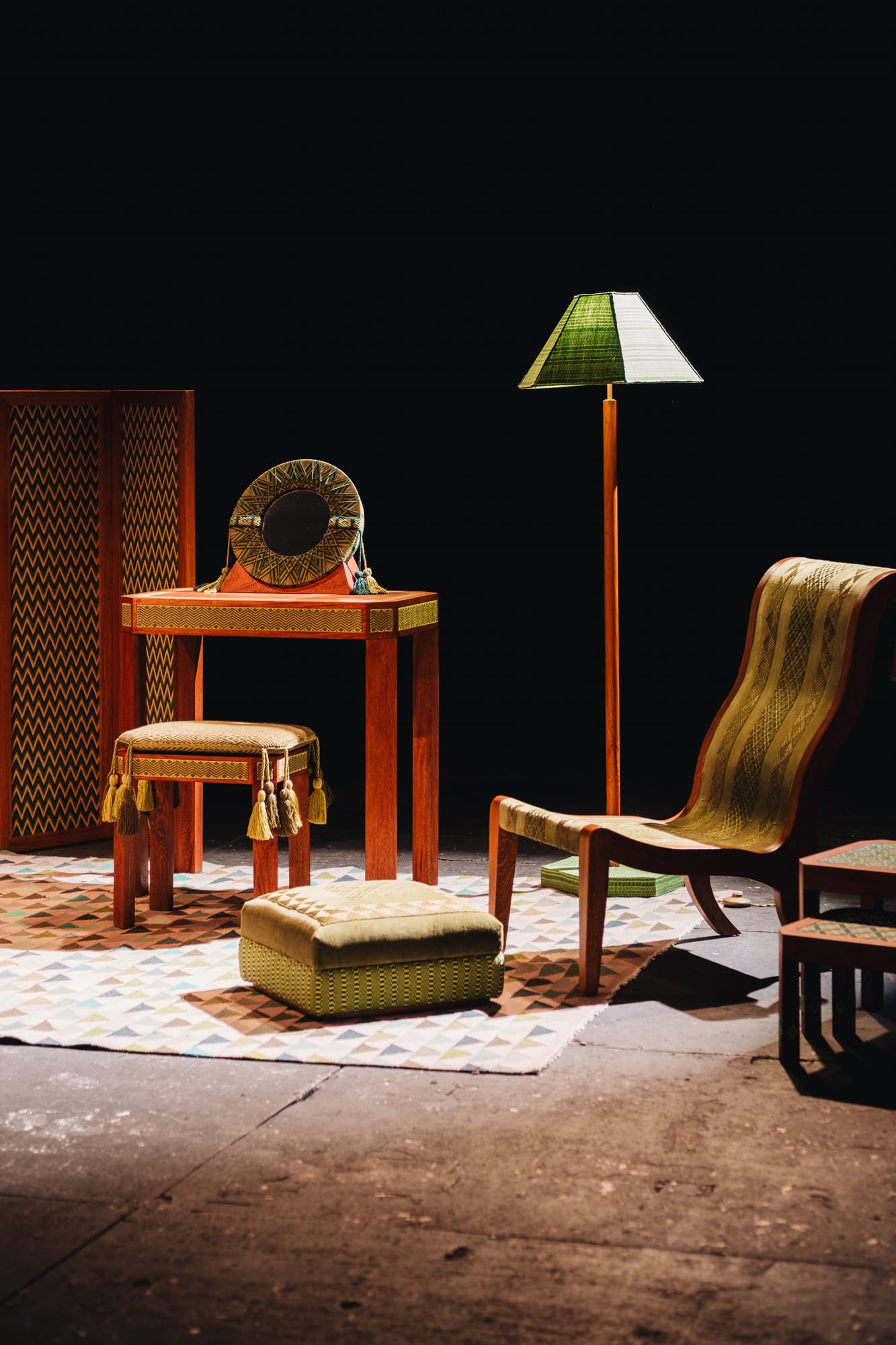
The Closet Scene brings together works by designers Alana Burns, Lucía Echavarría, and Andrea Vargas Diepa, who collectively propose a reflection on private spaces, spaces dedicated to retreat and intimacy, and on the objects that commonly populate them in our imagination.
A folding screen, a vanity, a chair, a lamp, a bathtub, a rocking chair, and a bed are arranged on the stage of the theater at the Escuela del Ballet Folklórico Amalia Hernández. More than mere theatrical props, these objects make their debut as actors within an intimate scene. In The Closet Scene, the private realm is displaced onto the stage, placing under public view what often remains hidden. The theatrical and literary framework proposed by the exhibition’s installation takes us back to the origins of feminine private spaces and even to the origin of the word used to designate them, the word closet, which derives from the Old French clos, meaning “closed.” Originally, the word didn’t refer to a piece of furniture, but to a small, private room intended for retreat, reflection, reading, or confidence. During Elizabethan England, the closet gradually evolved into an intimate, architectural space associated with contemplation, inner life, and morality, as seen in the famous scene from Hamlet known as “The Closet Scene.” This scene takes place in Queen Gertrude’s closet, where her son Hamlet confronts her with her own conscience for having married so soon after his father’s death. The scene offers the deepest insight into Gertrude’s character and reveals the complex relationship between mother and son, as well as Hamlet’s frenzied state; it is here that the line between feigned madness and real madness becomes blurred.
During the eighteenth century, the term closet coexisted with notions such as dressing room or toilette, becoming consolidated as a central space of private life, particularly female private life, and as a narrative setting in literature. The presence of women’s private spaces within the domestic sphere developed primarily in France and England during this period, and in the literature and painting of the time the dressing room began to be represented both as a metaphor and as an idealization of women’s private lives. Conceived as refuges of intimacy, these spaces were associated with retreat, preparation, and personal transformation, while simultaneously functioning as central narrative settings in popular English literature (in works such as Pamela and Clarissa by Samuel Richardson, to mention a few well-known examples).
The three designers featured in the exhibition are especially known for recovering ancestral techniques and materials, as well as for their commitment to preserving and sustaining traditions. In this context, they bring the notion of the private space and its furnishings into the present, inviting us to reflect on the need for spaces that foster contemplation, observation, and self-knowledge. It is within these spaces that time can unfold differently, personally, subjectively.
Alana Burns, remaining faithful to her practice of working with seashells, presents a bed, a daybed, conceived as a place for inhabiting time, resting, and establishing a temporal pause: a space of suspension and retreat. Lucía Echavarría presents designs associated with the dressing room, incorporating traditional textiles originally used in garments such as mochilas, belts, or huipiles from both Mexico and Colombia, here adapted for upholstery and furniture. Particularly notable is the transformation of items of dress into tapestries and domestic objects, displacing their function, scale, and meaning. Andrea Vargas Diepa, for her part, presents a bathtub and a rocking chair, objects that invite contemplation and pause, encouraging a slowing of time in order to create a space for intimate reflection.
The Escuela del Ballet Folklórico Amalia Hernández was conceived with the intention of establishing a space not only to house and safeguard, but also to contemporize the diverse dances of Mexico. The building was designed in 1968 by Agustín Hernández, brother of Amalia Hernández, in the Brutalist tradition, generating a hermetic interior shaped by monumental forms and exposed materials, where light enters and refracts, reinforcing the contrast between interior and exterior. In this way, the space resonates in two ways with The Closet Scene: through the relationship between contemporary objects and the traditions they bring into the present, and through the externalization of interior life.