
Featuring works by Corita, Bárbara Foulkes, Julieta Gil, Florencia Guillén, Elena del Rivero, Fiona Tommasi, Francesca Woodman and Jessica Wozny, this exhibition takes as its starting point the history of the space currently occupied by Casa Escuela, which once housed a public elementary school called “Rita Cetina” for more than 20 years as well as the story of Rita Cetina (1846-1908), known as the first Yucatecan mentor and a central figure in the development of the modern education system. Room Gymnastics is inspired by the significance of the educational movements that took place in Mérida at the end of the 19th century, movements that enabled women to participate in the modernity and progress promoted by the liberal national project.
This exhibition was curated by CO,MA and organized in collaboration with Casa Escuela
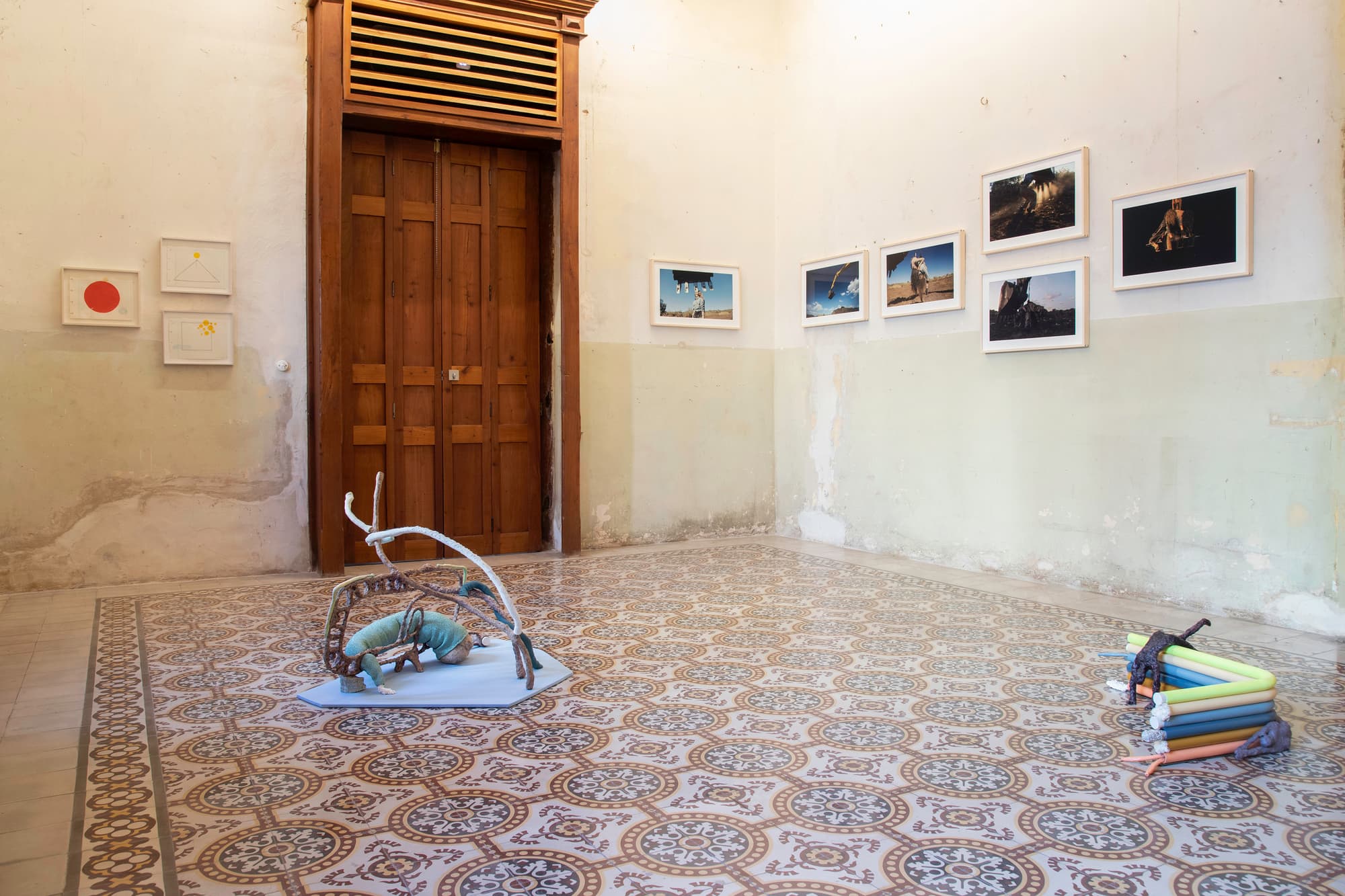
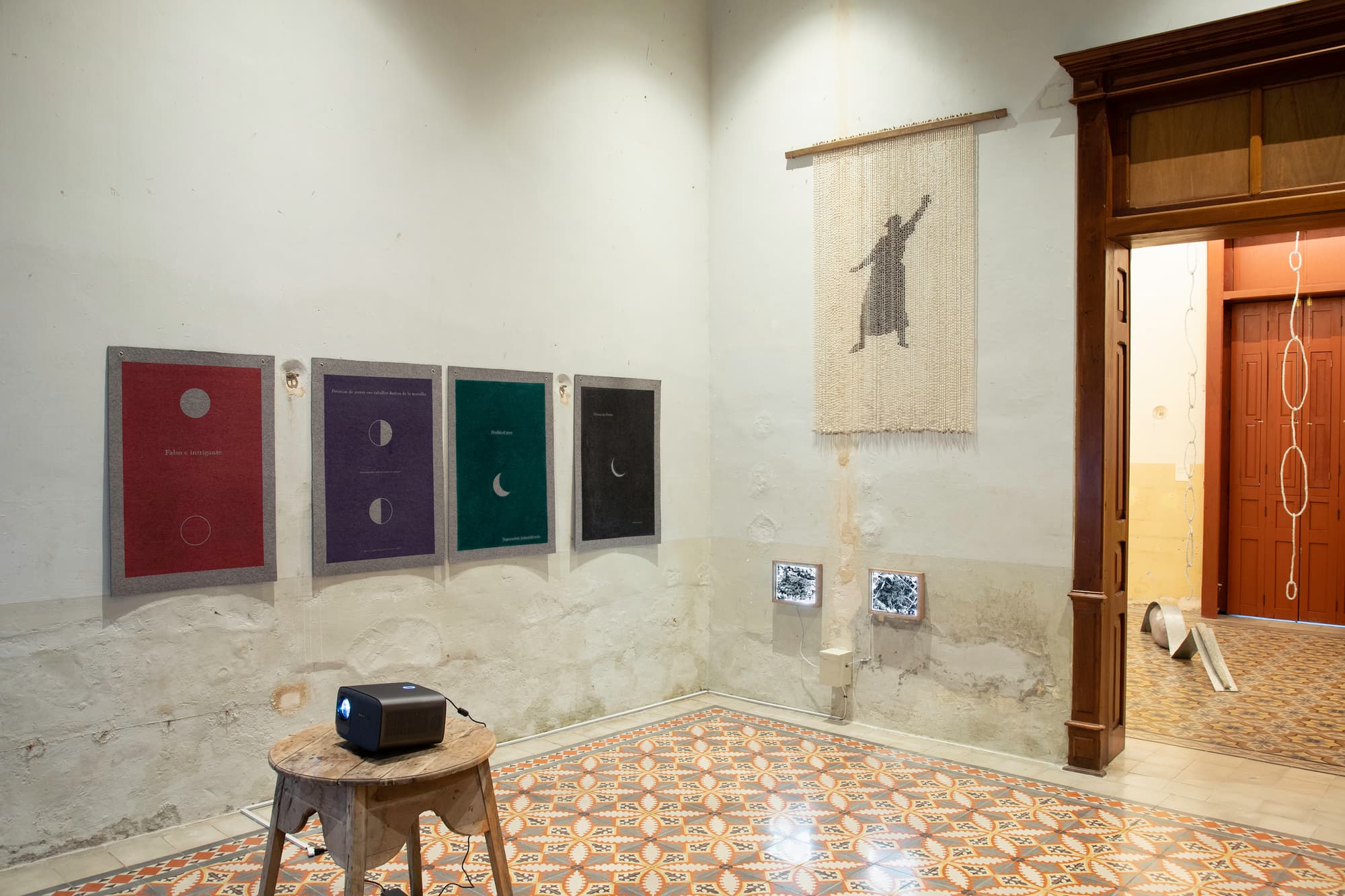
Featuring works by Corita, Bárbara Foulkes, Julieta Gil, Florencia Guillén, Elena del Rivero, Fiona Tommasi, Francesca Woodman, and Jessica Wozny, Room Gymnastics draws inspiration from the history of Casa Escuela, which housed the public primary school “Rita Cetina” for over 20 years (1982-2006). The exhibition also pays homage to Rita Cetina (1846-1908), celebrated as Yucatán’s first mentor and a key figure in the development of Mexico’s modern educational system. Cetina was a major influence on the educational movements emerging in Mérida in the late 19th century, which advocated for the inclusion of women in the nation’s liberal modernization project.
In late 19th-century Mexico, society was transitioning toward modernity, with the role of teachers, particularly women, closely linked to motherhood, as both were seen as essential to shaping civic identity. Despite a push for modernization, education often remained confined to domestic spaces, with homes adapted as schools, creating a tension between educational innovation and family life. Reflecting this balance, the exhibition title Room Gymnastics alludes to the “classroom gymnastics” included in Rita Cetina’s curriculum, an innovative practice of her time.
In 1870, under the principles of Enlightenment, Fine Arts, and Charity, Rita Cetina founded La Siempreviva, an educational project consisting of a girls’ school, a literary and charitable society, and a biweekly magazine written exclusively by women. This marked the establishment of one of the first schools for girls in the Yucatán Peninsula, with a special emphasis on offering education to girls from low-income backgrounds. Cetina was committed to public, accessible education, believing it should also be available to women. La Siempreviva laid the groundwork for women’s education in Mérida, aiming to provide knowledge that fostered their individualization and independence.
In 1877, Cetina was appointed director of the Literary Institute for Girls in Mérida, where she introduced a curriculum that included orthology, reading and elementary grammar; calligraphy and linear drawing; practical arithmetic; public law, moral philosophy, and etiquette; general geography; national history; the history of Yucatán; gymnastics; and manual arts. This curriculum framework influenced the selection and arrangement of works in the exhibition Room Gymnastics, evoking the transformation of domestic spaces into sites of academic and intellectual growth in late 19th-century Mexico.
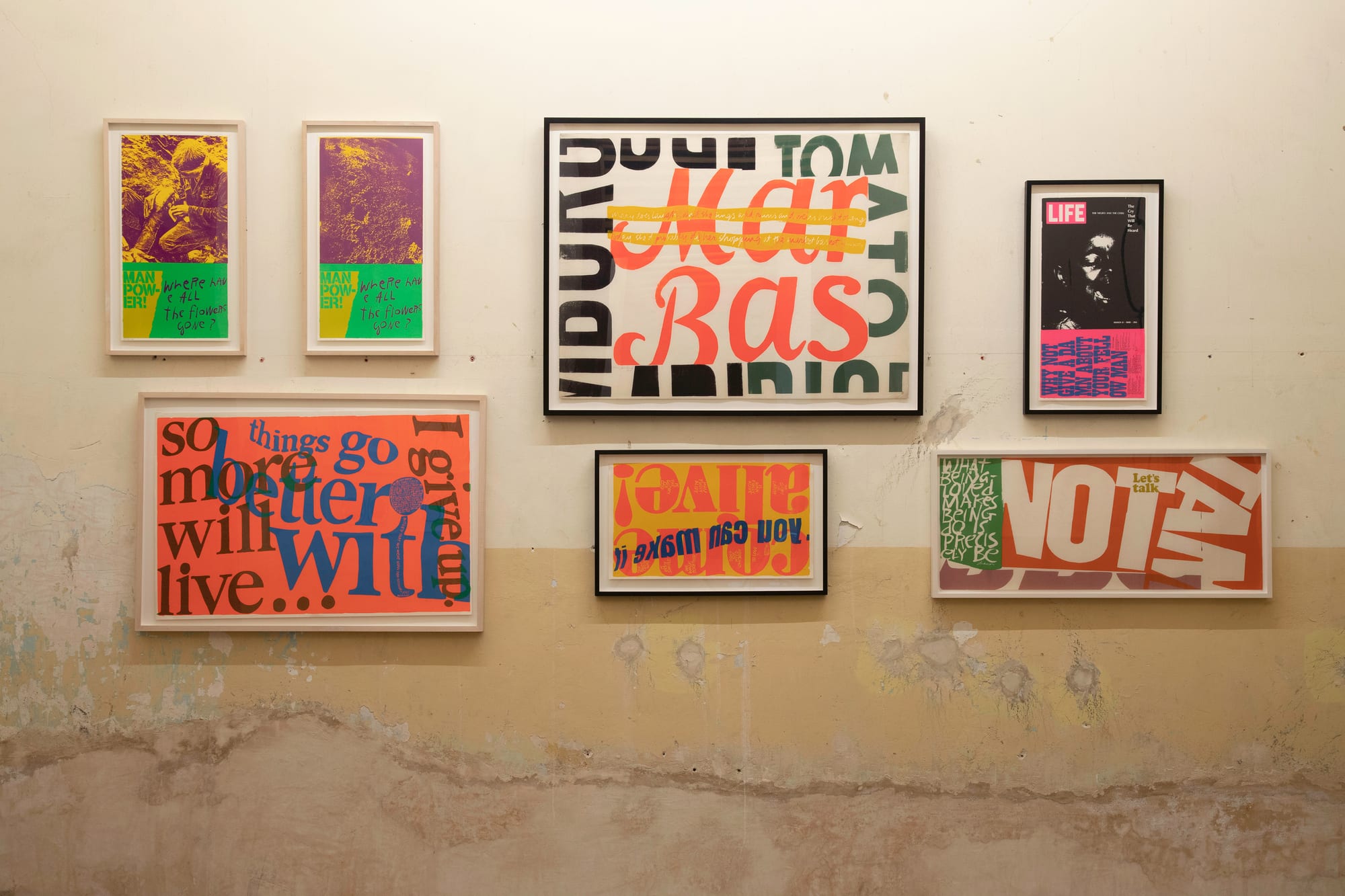
Presented for the first time in Mexico, Corita‘s work (Iowa, 1918 – Massachusetts, 1986) is represented in this exhibition by seven pieces from the 1960s, a period during which she experimented with the word as image. She created vibrant color fields that incorporated biblical texts, advertising slogans, and phrases from writers, activists, and intellectuals, primarily Gertrude Stein, E.E. Cummings, and Daniel Berrigan. Her compositions and phrases conveyed messages of love, peace, and social justice, inspired by the social movements of the time, including civil rights, anti-Vietnam War protests, and the countercultural spirit. Corita transformed everyday commercial imagery into powerful calls for hope, compassion, and action. She believed deeply in collaboration and collective creativity as means of amplifying ideas, viewing working within a community as a way to foster empathy and allow for shared expression.
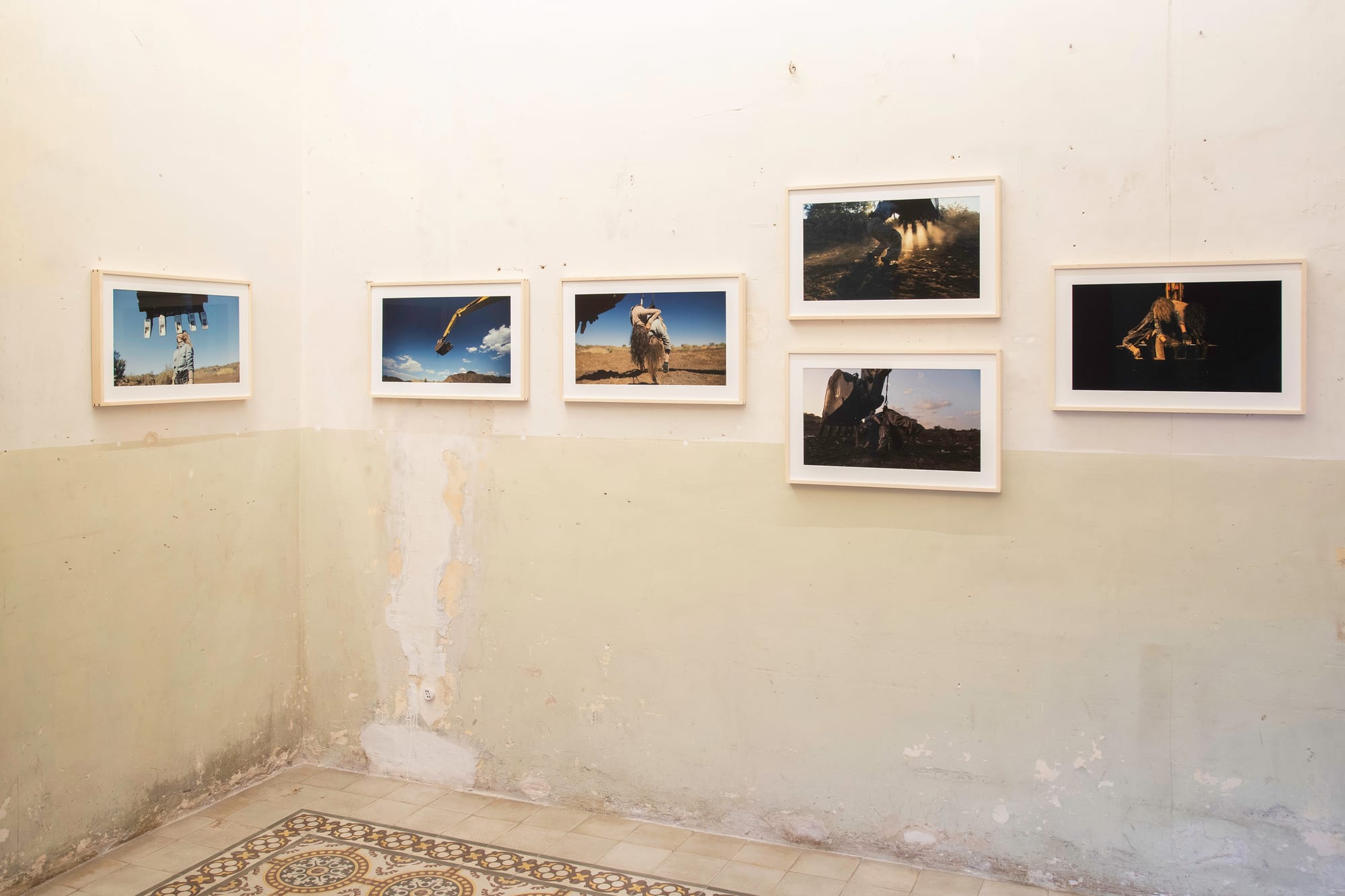
Bárbara Foulkes (Buenos Aires, Argentina, 1982) explores choreography as more than just movement, she investigates the relationship between the body, ideas, and the tensions that arise when challenging the natural inclinations of the human form. Her practice is characterized by a continuous inquiry into physical boundaries, where the body serves as a tool to explore external forces and the dynamics of gravity. This exhibition features six photographs from her series Como, siendo peces, podemos ver el agua, in which each image functions as a score, capturing specific actions that explore the tensions and counterpoints between the human body, the force of an industrial excavator, and gravity.
Julieta Gil (Mexico City, 1987) explores the intersections of public space and collective memory, documenting emblematic sites that represent “official history” and are often used as venues for social protest. Through her work, Gil examines the transformation of statues, monuments, and historical buildings, emphasizing how contemporary uses of these spaces reveal present-day social dynamics. In this exhibition, three plaques made of escayola (plaster) with inscriptions, created using traditional techniques, are displayed. These works reproduce portions of historical buildings, mimicking their structure, but with a key twist: the inscribed phrases are damage descriptions reported by the media during protests, highlighting the tension between official history and active social memory.
Florencia Guillén (Mexico City, 1978) centers her artistic practice on social observation and documentation, capturing everyday life and collective memory. Often examining the role of women in social movements, her work delves into themes of emancipation and narratives that challenge dominant histories. For this exhibition, Guillén’s pieces address the Bellavista Textile Factory in Nayarit, a key site in Mexico’s early labor movements. Founded in 1841, the factory became a battleground for labor rights, with women such as Francisca and Maclovia Quintero leading strikes and resisting injustices. These efforts culminated in Mexico’s first formal strike in 1905, which went on to inspire future labor movements in the region.
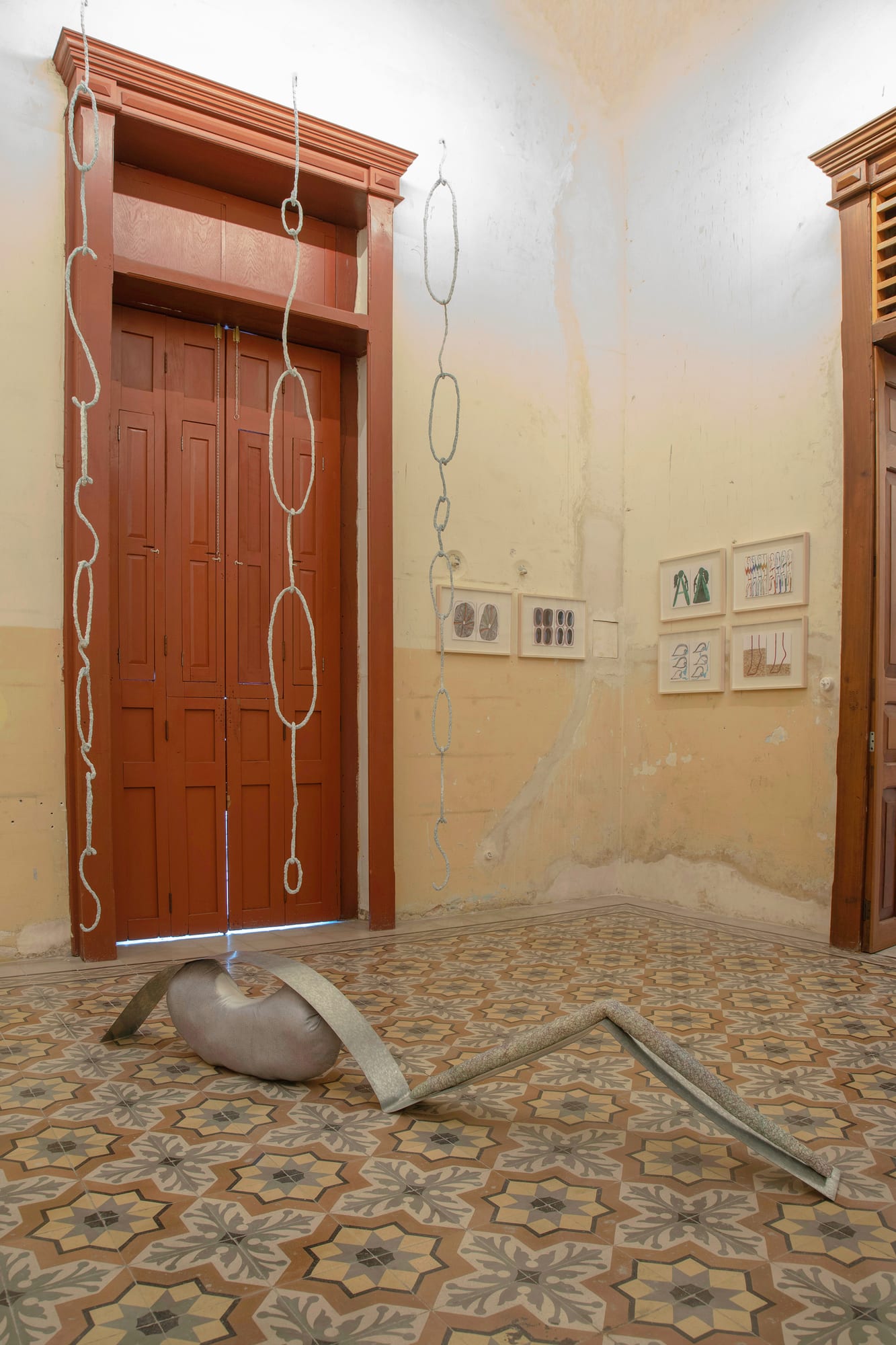
Elena del Rivero‘s (Valencia, Spain, 1949) practice explores themes of memory, daily life, interpersonal relationships, and the interplay between public and private spaces. By incorporating everyday objects and the act of mending, she creates a dialogue that bridges the personal, social, and political. This exhibition features works that exemplify her approach, including household textiles such as kitchen towels, tablecloths, letters, and poems, alongside selections from her Domestic Landscapes series.
By integrating everyday objects into her art, del Rivero transforms them into symbols of intimacy and the mundane while also using them to engage with themes of repair. Her choice of domestic materials reflects her anti-monumentalist stance, challenging traditional representations of power and symbols of status. In her work, sewing and mending become metaphors for social and emotional healing, touching on themes of loss and recovery. The consistent presence of needle and thread in her pieces emphasizes this theme. In works like Domestic Landscape with Turmeric (2018), del Rivero combines gouache, thread, and turmeric on vintage paper to create tactile compositions that evoke memory and the passage of time.
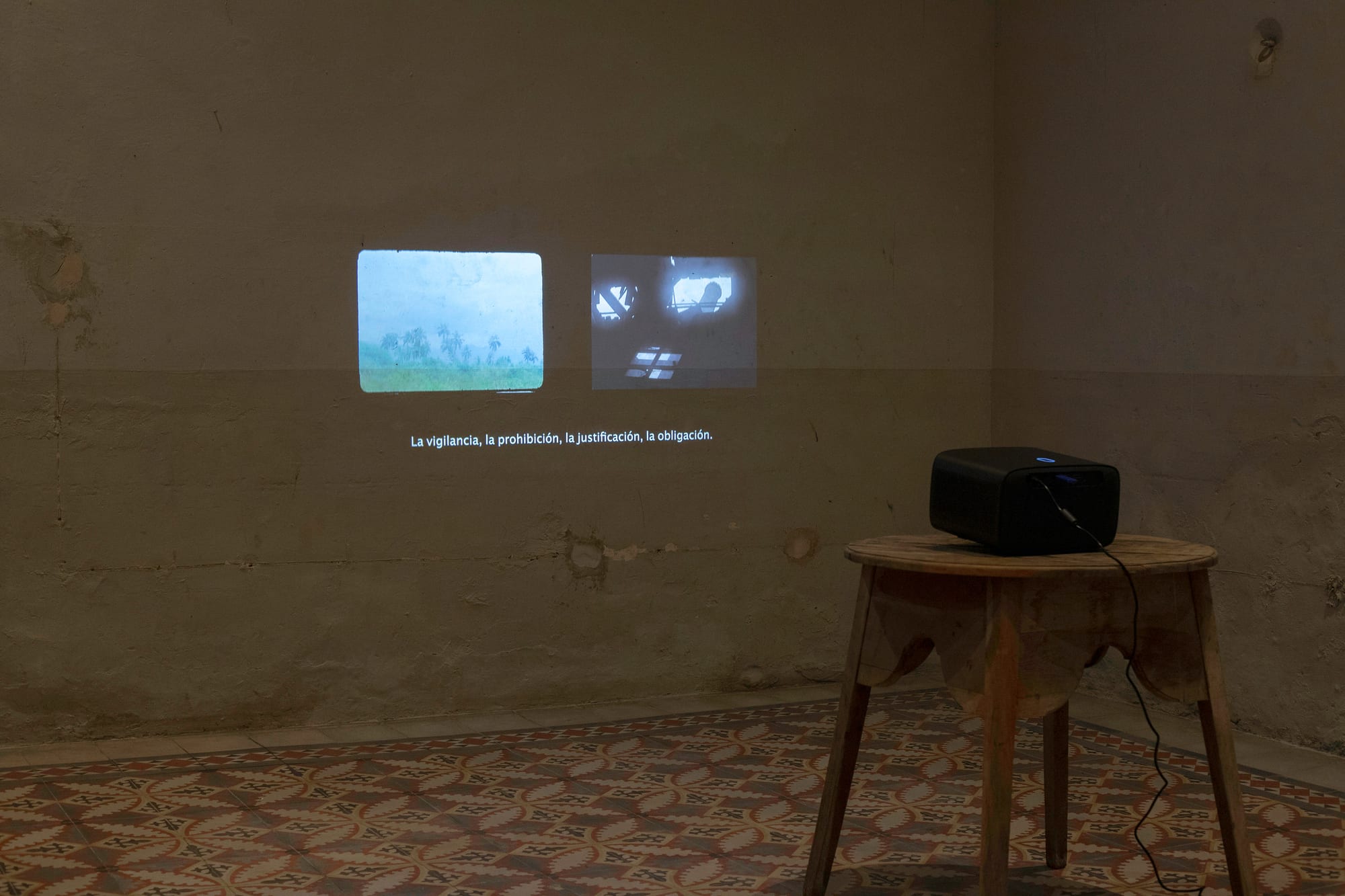
Fiona Tommasi (State of Mexico, Mexico, 1999) uses the metaphor of “observing through the camera” as a key strategy to question the role of subjectivity, figuration, and the concept of identity in documentary work. In her practice, she combines contemplation with an economical use of cinematic language to craft intimate portraits and narratives that extend beyond the duration of her films. She captures fleeting moments and scenes that tell complex stories. In this exhibition, Desire Line, a black-and-white 16mm diptych, engages with the idea of the “third image” from Soviet montage theory of the 1920s. This concept suggests that meaning emerges from the combination of two shots, creating an idea or emotion that transcends the individual images, inviting the audience to participate in the creation of meaning. Tommasi is interested not only in using analog film but also in ensuring that the entire process is manual. She personally develops the film and creates the prints or positive copies using the bipack printing technique. Furthermore, she is constantly searching for ways to recover archaic or obsolete objects and technology. Given the nature of the space and the duration of this exhibition, the piece Desireline was transferred to video and projected digitally to allow for continuous presentation.
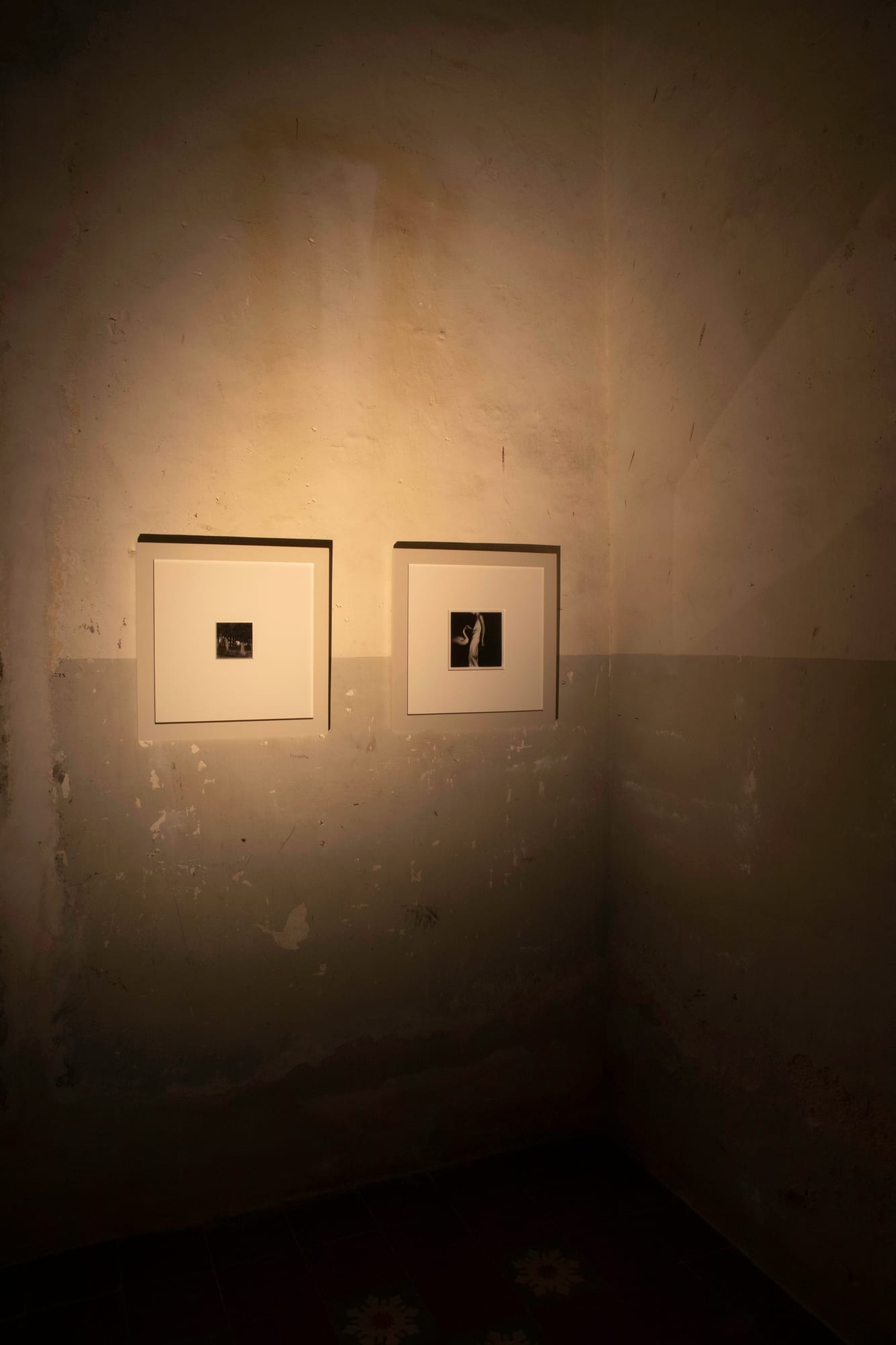
Two photographs by Francesca Woodman (Colorado, United States, 1958 – New York, United States, 1981) are featured in the exhibition. These are unique, original editions from the late 1970s. Both works embody what has come to define Woodman’s oeuvre: the act of disappearing. Her figure, obscured or blending into the surroundings, seems to dissolve, yet remains clearly identifiable in each image. Resembling a Victorian shadow play, the figures appear ethereal, fleeting, and ghostly, evoking a sense of the supernatural. Among the more than 800 negatives Woodman left behind after her untimely death, most focus on the exploration of the human form and the self-portrait, complete or fragmented, along with its transcendence within physical space.
Jessica Wozny (North Rhine-Westphalia, Germany, 1978) works across sculpture and drawing. This exhibition features examples of her work in both media through two main series: Imitations (drawing) and Sessions/Sitzungen (sculpture, high relief). Wozny explores the relationship between entropy and form, employing materials such as clay, flannel, latex, sponges, tow, and wool. Through these materials, her work seeks to provoke sensations in the viewer. Linguistics also plays a significant role, with texts and symbols interwoven throughout. This linguistic exploration reflects her interest in uncovering meanings beyond traditional languages, merging the content of her pieces with their materiality.
Room Gymnastics invites visitors to explore the space with the understanding that each set of works by the selected artists, distributed across the various galleries of Casa Escuela, represents a distinct subject or discipline. The exhibition unfolds as a simultaneous event of creative processes. It evokes the schools of the late 19th century, where a group of educators, led by Rita Cetina, promoted cooperation and collective thinking, paving the way for future significant social movements and changes.